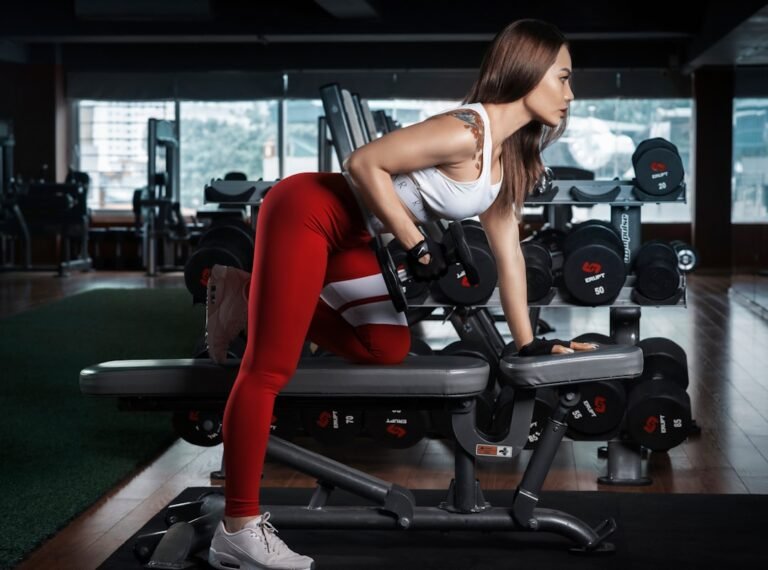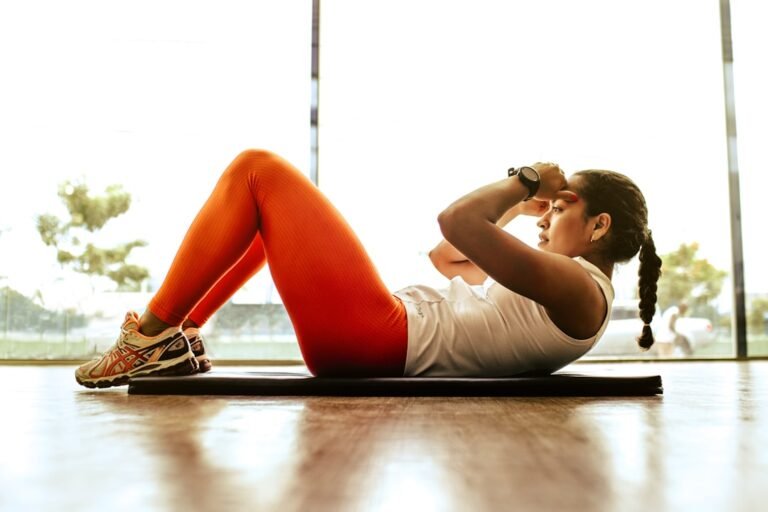
A tabata workout for beginners at home with no equipment is one of the fastest ways to fit a real workout into a busy day. The whole session can be as short as 15 to 20 minutes including warm-up, and you only need a bit of floor space. This guide explains what tabata is, shows an easy eight-move routine with beginner-friendly options, and helps you build a safe weekly plan without any gear.
What Is a Tabata Workout?
Tabata is a style of high-intensity interval training (HIIT). The classic format is 20 seconds of hard work followed by 10 seconds of rest, repeated for 8 rounds, which adds up to 4 minutes per block. The name comes from Dr. Izumi Tabata, a Japanese researcher who studied this interval pattern.
For beginners, the “hard” part should be relative to you. That means challenging but controlled, not an all-out sprint. You can also stretch the work and rest periods (for example 20 seconds on, 40 seconds off) until your fitness builds. The Mayo Clinic describes HIIT as alternating short bursts of intense activity with recovery periods, which is exactly what tabata does.
Benefits for Beginners
- Time efficient. A complete session can fit into a lunch break or before the kids wake up.
- No equipment needed. Bodyweight moves keep it free and easy to start anywhere.
- Adjustable. You control the speed, the range of motion and the rest, so it scales to your level.
- Variety. Short blocks keep your mind busy, which many people find helps them stick with exercise.
- Works with other training. It pairs well with strength days and walking.
Results vary from person to person and depend on your sleep, food, consistency and starting point, so focus on how you feel and the habits you build rather than quick outcomes. If you are brand new to exercise, our guide on how to start working out as a complete beginner covers the basics first.
Before You Start
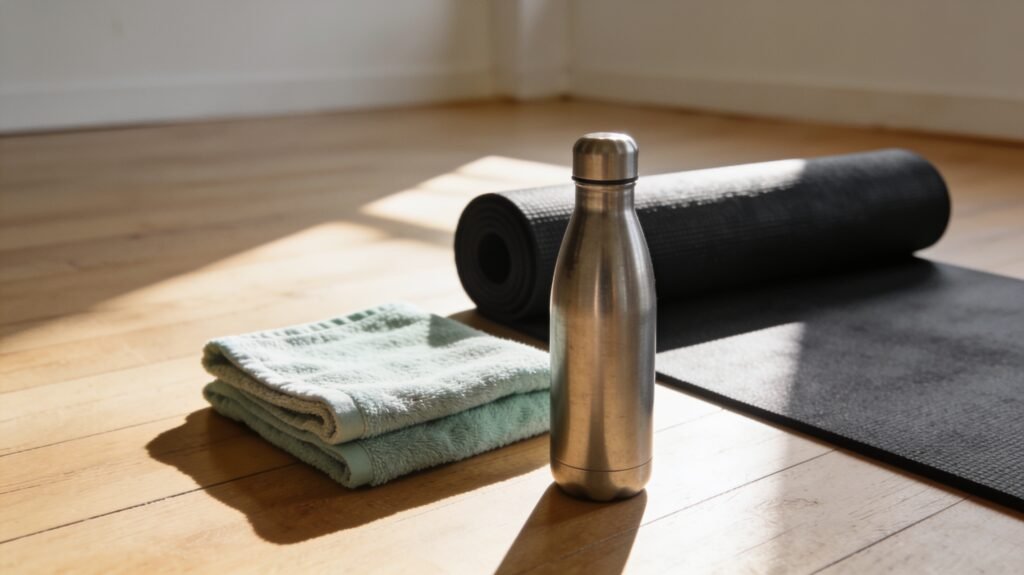
Take five minutes to warm up. March on the spot, roll your shoulders, swing your arms, do a few gentle squats and hip hinges, and add some easy side steps. Wear supportive shoes, clear a space about two metres square, and keep water nearby. A timer is helpful; any free tabata timer app, or your phone stopwatch, works fine.
If you are returning after a long break, are pregnant, have heart, joint or blood pressure concerns, or take medication, speak with a healthcare professional before beginning high-intensity exercise. The NHS also offers general guidance on how much activity adults can aim for.
The 8-Move No-Equipment Tabata Workout
Do each exercise for 20 seconds, rest for 10 seconds, and move to the next. After all 8 moves you have completed one 4-minute block. Beginners can start with just one block and build up to two, resting for 1 to 2 minutes between blocks.
1. Bodyweight Squat
Stand with feet shoulder-width apart, push your hips back and bend your knees as if sitting in a chair, then stand tall. Keep your chest up and heels down. Move at a steady pace rather than rushing.
2. Incline or Knee Push-Up
Place your hands on a sturdy counter, sofa or the floor with knees down. Lower your chest toward your hands and press back up with a straight line from head to knees or hips. Easier angles are perfectly fine.
3. Marching High Knees
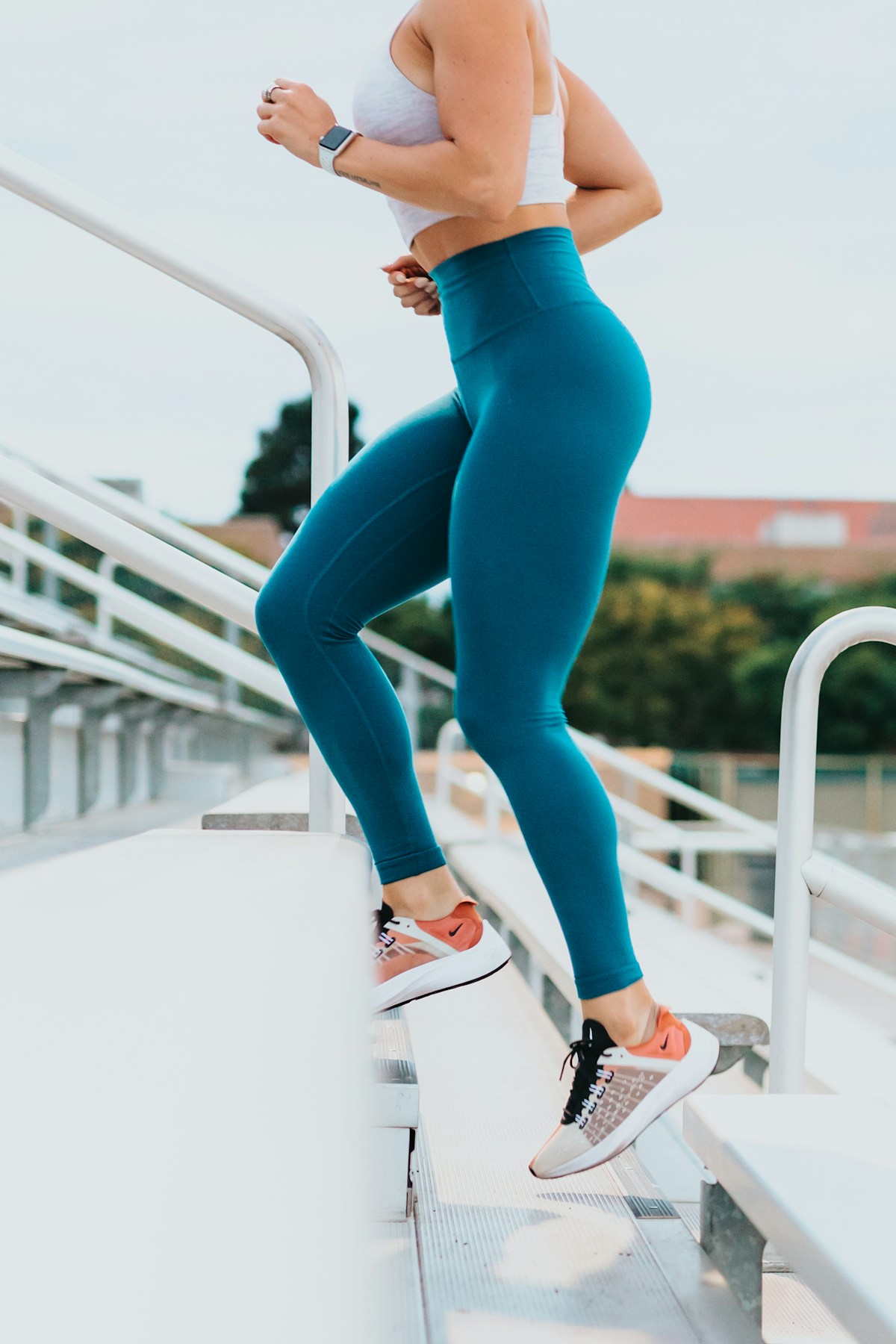
Lift your knees toward hip height while swinging your arms. Keep it low-impact by marching instead of jogging. As you get fitter, speed up into a gentle run on the spot.
4. Reverse Lunge
Step one foot back, lower both knees to roughly 90 degrees, then push through the front heel to return. Alternate legs. Hold a wall or chair for balance if you need it.
5. Mountain Climbers (Slow)
From a high plank with hands under shoulders, drive one knee toward your chest, then switch. Keep your hips level. To make it easier, place your hands on a raised surface such as a sturdy bench.
6. Glute Bridge
Lie on your back with knees bent, press through your heels to lift your hips, squeeze at the top and lower. This gives your legs and core a break from impact while still working hard.
7. Squat Jack or Step Jack
Step your feet wide into a squat while bringing your hands together, then step back in. The jumping version is optional; stepping keeps the impact low and is a great beginner option.
8. Plank Hold or Knee Plank
Hold a forearm plank on your toes or knees for the full 20 seconds, keeping a straight line and breathing steadily. For more core work, see our core workout at home for beginners.
Beginner Modifications
- Lengthen rest. Try 20 seconds work and 40 seconds rest until the intervals feel manageable.
- Reduce rounds. Start with 4 rounds per block, or one exercise repeated twice.
- Lower impact. Replace jumps with steps, marching or slow reps. This is kinder on knees and joints.
- Use the wall or a chair. A stable surface helps with balance, push-ups and lunges.
- Rate your effort. Aim for about a 6 to 7 out of 10 effort in the early weeks. You should be able to speak in short phrases.
How to Time Your Session
A realistic first session looks like this: a 5-minute warm-up, one 4-minute tabata block, a 2-minute walk or gentle march to recover, then a 3-minute cool-down with easy stretches for your legs, hips, chest and shoulders. That is roughly 15 minutes in total. After two or three weeks, many beginners add a second block, using a different set of exercises so that the same muscles are not worked back to back. Write down how each session felt, since your notes will show your progress even when the scale or mirror does not.
How Often Should You Do Tabata?
Because tabata is intense, beginners usually do best with 2 to 3 sessions per week, with at least one rest or easy day in between. A simple week could look like this:
- Monday: Tabata (1 to 2 blocks)
- Tuesday: Easy walk or stretching
- Wednesday: Strength or mobility session
- Thursday: Tabata (1 to 2 blocks)
- Friday: Rest or gentle yoga
- Weekend: Longer walk or a relaxed 20-minute home workout
If your goal is overall fitness, mix tabata with strength training. Our article on strength training and fat loss explains why lifting and intervals work well together, and best cardio workouts at home offers more low-equipment options.
Common Mistakes to Avoid
- Skipping the warm-up. Cold muscles and joints are more likely to complain. Spend a few minutes preparing.
- Going all-out too soon. Build up gradually across several weeks.
- Sloppy form. Tired reps get messy. Slow down or take the extra rest if technique slips.
- Doing it every day. Recovery is when your body adapts, so schedule rest days.
- Holding your breath. Breathe steadily throughout each interval.
Recovery and Fuel
After your session, walk slowly for a couple of minutes, drink water and do some gentle stretches. Sleep, hydration and balanced meals all support your training. A mix of protein, carbohydrates and vegetables is a good general pattern; see what to eat before and after a workout for simple ideas. If you feel unusually sore or tired, read how to recover faster after a workout and take an extra rest day, which is part of the plan, not a setback. Why rest days are essential explains this in more detail.
Safety First
Stop and rest if you feel dizzy, short of breath in an unusual way, chest discomfort or sharp pain. Seek medical advice promptly for those symptoms. Anyone with a medical condition, who is pregnant, or who takes prescription medication should check with a doctor before starting high-intensity workouts. This article is general information, not medical advice.
FAQ
Is tabata good for beginners?
It can be, as long as you scale it. Use lower-impact moves, longer rests and fewer rounds at first. Start with one 4-minute block and build gradually. If you have health concerns, check with a healthcare professional before beginning.
How long is a beginner tabata workout?
One tabata block lasts 4 minutes. With a 5-minute warm-up and a short cool-down, a beginner session with one or two blocks takes roughly 15 to 25 minutes, which makes it an easy fit for a busy schedule.
How many times a week should I do tabata?
Most beginners do well with 2 to 3 sessions per week, with rest or easy days in between. Increase only if you recover well, sleep properly and feel good. More is not always better with high-intensity work.
Can I do tabata without jumping?
Yes. Swap jumps for marching, step jacks, slow mountain climbers and bodyweight strength moves. Low-impact tabata still raises your heart rate and is often kinder to the knees, ankles and hips, especially in the early weeks.
Conclusion
A tabata workout for beginners at home with no equipment is simple, quick and flexible. Start with one block, choose low-impact versions, rest well between sessions and increase gradually. Consistency matters far more than intensity, so aim for a routine you can repeat every week. When you are ready for a longer session, try our beginner gym workout next.
About the author: Jake Reynolds writes beginner-friendly fitness and nutrition guides. Content is for general information only and is not a substitute for professional medical advice.