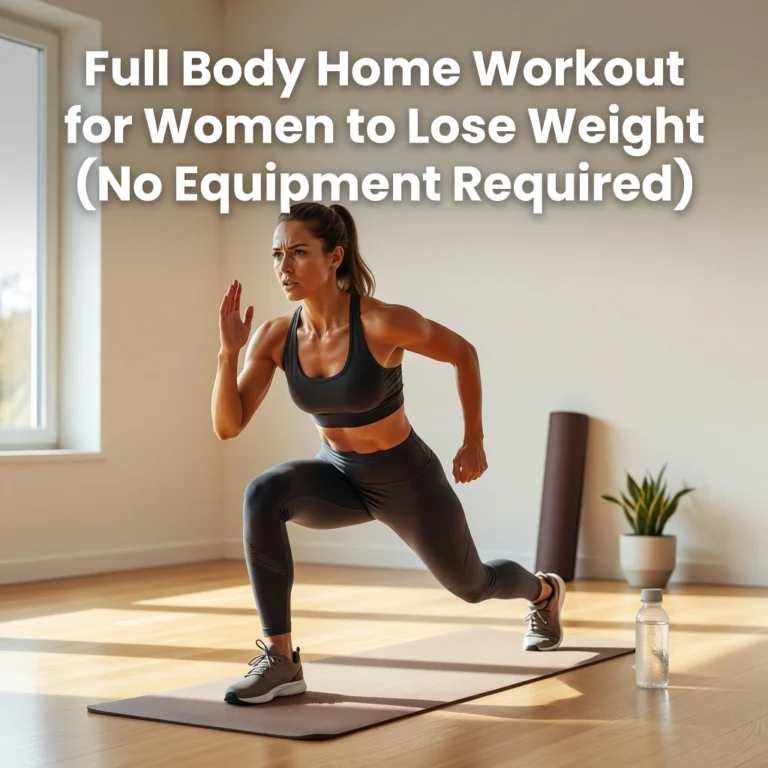
A gym membership is not a prerequisite for losing weight. Some of the most effective cardio workouts for fat loss require nothing more than a small patch of floor space and the willingness to move.
The exercises below are ranked by effectiveness for weight loss, explained clearly for beginners, and structured into actual workouts you can start today.

What Makes Cardio Effective for Weight Loss?
Cardio supports weight loss by creating a calorie deficit. The more intense the effort, the more calories you burn during the session — and with high-intensity work, you also get an “afterburn effect” (EPOC) where your body continues burning extra calories for hours afterward. That said, the best cardio workout is the one you’ll actually do consistently.
The Best At-Home Cardio Exercises for Weight Loss
1. Jumping Jacks
Simple, effective, and accessible to almost everyone. A 150-pound person burns roughly 100 calories in 10 minutes of jumping jacks. They’re easy to sustain and easy to modify (step out instead of jump for low impact).
How to do them: Stand with feet together and arms at your sides. Jump your feet out wide while bringing your arms overhead. Jump back to start.
Target: 3 sets of 60 seconds with 30 seconds rest.
2. High Knees
High knees are essentially running in place with exaggerated knee drive. They burn significantly more calories than jogging at an easy pace and engage your core and hip flexors throughout.
How to do them: Stand tall. Drive your right knee up toward your chest as you pump your left arm forward, then alternate quickly.
Target: 4 sets of 40 seconds with 20 seconds rest.
3. Burpees
Burpees are one of the most efficient calorie-burning exercises that exist without equipment. A person weighing 155 pounds burns approximately 10 calories per minute doing burpees at moderate effort.
How to do them: Start standing. Drop your hands to the floor, jump your feet back to a plank, perform a push-up, jump your feet back to your hands, then jump up with arms overhead.
Target: 3 sets of 10 to 15 reps with 45 seconds rest. Modify by removing the jump or push-up if needed.
4. Mountain Climbers
Mountain climbers are a cardio and core exercise in one. The instability of supporting your weight on your hands while moving your legs forces your core to work constantly.
How to do them: Start in a push-up position. Drive your right knee toward your chest, then quickly switch legs. Keep your hips level and alternate at a fast pace.
Target: 4 sets of 30 seconds with 15 seconds rest.
5. Squat Jumps
Squat jumps add explosive power to a standard squat, turning a strength exercise into a powerful cardio tool that also builds lower body strength.
How to do them: Stand with feet shoulder-width apart. Squat until thighs are parallel to the floor, then drive explosively and jump as high as you can. Land softly with bent knees.
Target: 3 sets of 12 to 15 reps with 45 seconds rest.
6. Lateral Shuffles
Lateral shuffles are underrated. They get your heart rate up effectively, are low impact compared to jumping exercises, and improve coordination and agility.
How to do them: Stand with knees slightly bent. Step your right foot out to the right, bring your left foot to meet it, then repeat — shuffle 4 to 6 steps in each direction.
Target: 4 sets of 45 seconds.
Two Complete At-Home Cardio Workouts
Workout A: Beginner (20 Minutes)
Do each exercise for 30 seconds, rest 30 seconds, then move to the next. Complete the circuit twice with 90 seconds rest between circuits.
- Jumping Jacks
- High Knees (slow pace)
- Lateral Shuffles
- March in Place
- Modified Burpees (no jump, no push-up)
Workout B: Intermediate/Advanced HIIT (25 Minutes)
Work for 40 seconds, rest 20 seconds. Complete the circuit 3 times with 60 seconds rest between circuits.
- High Knees
- Burpees
- Mountain Climbers
- Squat Jumps
- Jumping Jacks
Tips for Beginners Starting Home Cardio
If you’re new to cardio training, a few principles will save you from the most common mistakes:
Start with low-impact options. Exercises like marching in place, lateral shuffles, and modified jumping jacks let you build cardiovascular fitness without stressing joints that aren’t yet conditioned for high-impact work. Spend two to three weeks on low-impact cardio before progressing to jumping movements.
Focus on time, not intensity. In the first few weeks, the goal is simply to complete the session — not to go as hard as possible. Pace yourself. You should be able to hold a conversation (though it will be difficult) during moderate cardio. If you can’t speak at all, you’re working too hard for a beginner session.
Warm up every time. Two to three minutes of light marching, arm circles, and leg swings prepares your joints and elevates your heart rate gradually. Jumping straight into high-intensity cardio cold is a reliable way to pull a muscle.
Rest days are training days. Your cardiovascular system adapts during recovery, not during the workouts themselves. Three sessions per week with full rest days in between will produce faster improvements than six sessions in a row.
Cardio is one input among several. Our guide to the best exercises to lose weight sets out what the trial evidence says about how each type contributes.
How Often Should You Do Cardio for Weight Loss?
Three to five sessions per week is the sweet spot for most people targeting fat loss. If you’re a complete beginner, start with three days per week, take at least one full rest day between sessions, and build up gradually over 4 to 6 weeks.
The Truth About Cardio and Weight Loss
Cardio alone rarely produces dramatic weight loss results. Nutrition is the primary driver of fat loss. Cardio accelerates the process by increasing your total daily calorie burn and improving cardiovascular health, sleep quality, and mood. Pair these workouts with a diet built around whole foods, adequate protein, and reasonable portion sizes and you’ll see results.
A moderate 30-minute workout done four days per week will produce far better long-term results than brutal hour-long sessions done sporadically. Pick a schedule you can realistically maintain and build from there.
Frequently Asked Questions
How long should a cardio workout be for weight loss?
20 to 45 minutes is the effective range for most people. Beginners should start at 20 minutes and build up gradually. Sessions beyond 60 minutes offer diminishing returns and increase injury risk for most recreational exercisers.
Is HIIT better than steady-state cardio for fat loss?
Both work. HIIT burns more calories per minute and creates a larger afterburn effect. Steady-state cardio is easier to sustain and recover from. The best choice is whichever one you’ll do consistently. Many people do well combining both in their weekly routine.
Can I do cardio every day?
You can, but rest days are important for recovery. If you want to exercise daily, alternate between high-intensity sessions and low-impact movement like walking or yoga. Doing HIIT every single day without rest will increase injury risk and can stall progress.