How to Build Strength With Dumbbells Only (Full-Body Plan That Actually Works)
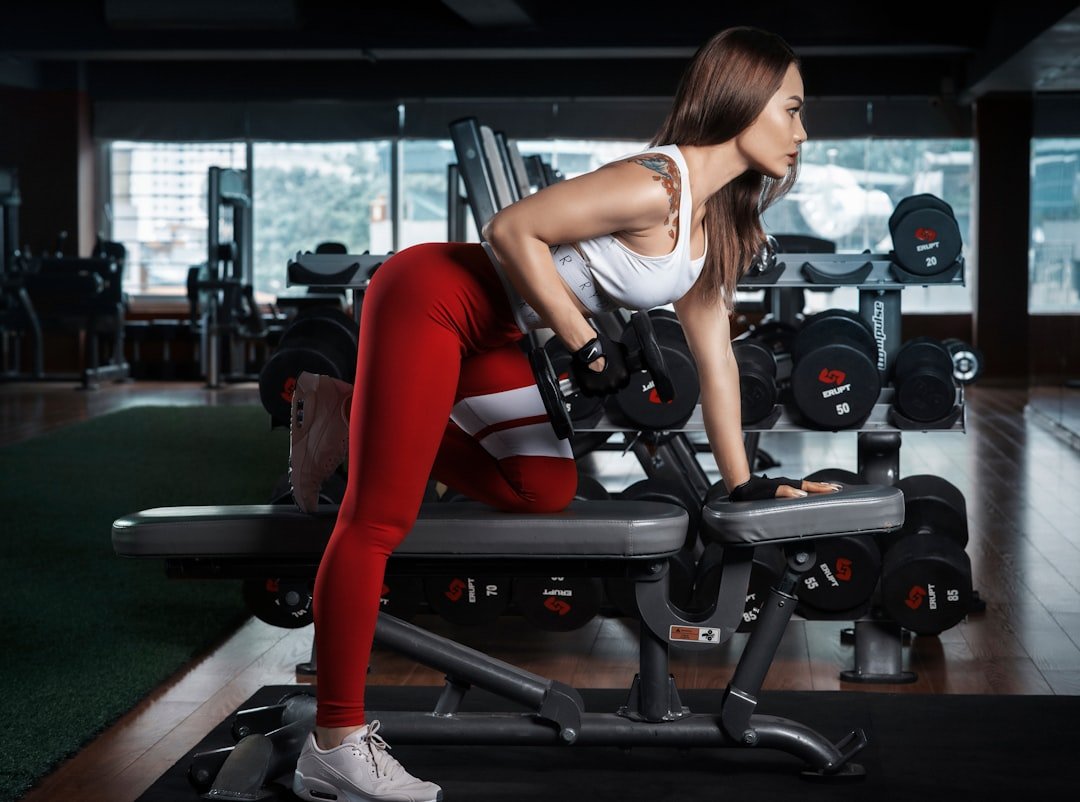
💪 Save this full-body dumbbell strength plan to Pinterest so you never lose it!
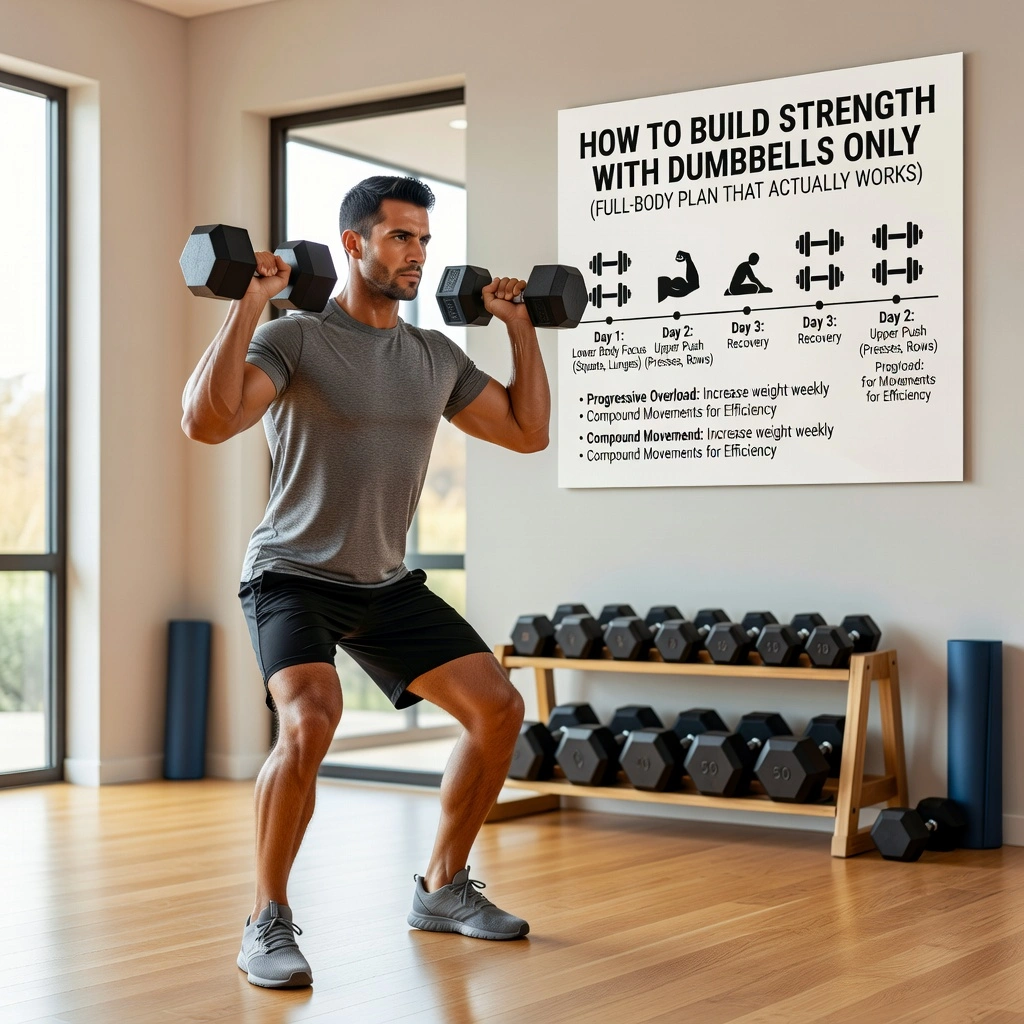
Learning how to build strength with dumbbells is one of the smartest fitness decisions you can make. Dumbbells are affordable, versatile, and work every major muscle group without a barbell or a gym membership. The right dumbbell-only plan can deliver serious strength gains in 8-12 weeks.
Most people think you need a full rack of barbells and a power cage to get strong. That is simply not true. Progressive overload — not fancy equipment — is what drives strength. As long as you challenge your muscles with increasing weight or reps over time, they adapt and grow stronger. Dumbbells let you do exactly that.
This guide walks you through a complete full-body dumbbell strength program. You will find the best exercises, a weekly training structure, a rep range breakdown, and an interactive workout tracker to monitor your progress. Whether you train at home or in a gym, this plan works.
Quick Answer: How to Build Strength With Dumbbells (5 Steps)
- Choose compound movements — goblet squats, Romanian deadlifts, rows, press variations.
- Train in the 4-6 rep strength range — use a weight you cannot lift more than 6 times with good form.
- Apply progressive overload — add 2.5-5 lb or one extra rep per week.
- Follow a 3-4 day split — full body or push/pull/legs both work well.
- Rest and eat enough protein — aim for 0.7-1 g of protein per pound of bodyweight daily.
Table of Contents
Why Dumbbell Strength Training Fails for Most People
The number one reason people fail to build strength with dumbbells is using weights that are too light. Light weights feel comfortable but do not challenge the neuromuscular system enough to trigger adaptation. Strength requires near-maximal effort.
The second reason is skipping progressive overload. Doing the same 15-rep set with 20 lb dumbbells every Monday for three months does not build strength. It maintains what you already have. You must increase the demand on your muscles week over week.
Finally, most people skip the big compound movements and fill their sessions with isolation work — bicep curls, lateral raises, tricep kickbacks. These are finishing exercises, not strength builders. Lead with squats, deadlifts, rows, and presses.
The 15 Best Dumbbell Exercises for Full-Body Strength
1. Goblet Squat — the most beginner-friendly lower-body strength builder.
Hold one heavy dumbbell vertically at your chest. Squat until your thighs are parallel or below parallel. Drive through your heels to stand. The goblet position keeps your torso upright and teaches perfect squat mechanics. Start with a 35 lb dumbbell and work toward 70-80 lb for serious strength.
2. Romanian Deadlift — the best posterior chain exercise you can do with dumbbells.
Hold two dumbbells in front of your thighs. Hinge at the hips, pushing them back as the dumbbells lower toward mid-shin. Keep a neutral spine throughout. This hammers your hamstrings, glutes, and lower back. Most people can handle 40-60 lb per hand once they master the hinge pattern.
3. Dumbbell Bench Press — builds pressing strength without a spotter or a barbell.
Lie on a flat bench or the floor. Press two dumbbells from chest height to full lockout. The floor press variation is great at home and limits shoulder strain. Work up to dumbbells that are 40-50% of your bodyweight per hand for a solid strength benchmark.
4. Bent-Over Dumbbell Row — essential for back strength and posture.
Hinge forward to roughly 45 degrees. Row both dumbbells to your hip bones, pulling elbows back hard. Squeeze your shoulder blades together at the top. This is the single best dumbbell move for upper back and lat strength. Use straps if your grip gives out before your back does.
5. Dumbbell Overhead Press — builds shoulder and upper body pressing power.
Stand or sit. Press dumbbells from shoulder height to full lockout overhead. Keep your core braced and avoid excessive lumbar arch. Standing presses also challenge your core stability. A common goal: pressing dumbbells equal to 30-35% of your bodyweight per hand.
6. Bulgarian Split Squat — the hardest single-leg exercise in this list.
Place your rear foot on a bench or chair. Lower your front leg until the knee nearly touches the floor. This brutal move builds unilateral leg strength and exposes imbalances between sides. Even 20 lb dumbbells feel heavy here. Build toward 40-50 lb per hand over time.
7. Dumbbell Deadlift — a full-body pull that rivals barbell work at moderate loads.
Set two heavy dumbbells on the floor on either side of your feet. Push the floor away as you drive your hips forward to stand. This teaches proper deadlift mechanics and builds full posterior chain strength. Great for home lifters who cannot access a barbell.
8. Incline Dumbbell Press — targets the upper chest for a complete pressing program.
Set a bench to 30-45 degrees. Press dumbbells from chest height upward at an angle. The incline variation develops the upper chest fibers that flat presses miss. Pair it with flat bench presses on alternating sessions for complete chest development.
9. Single-Arm Dumbbell Row — fixes imbalances and builds serious lat thickness.
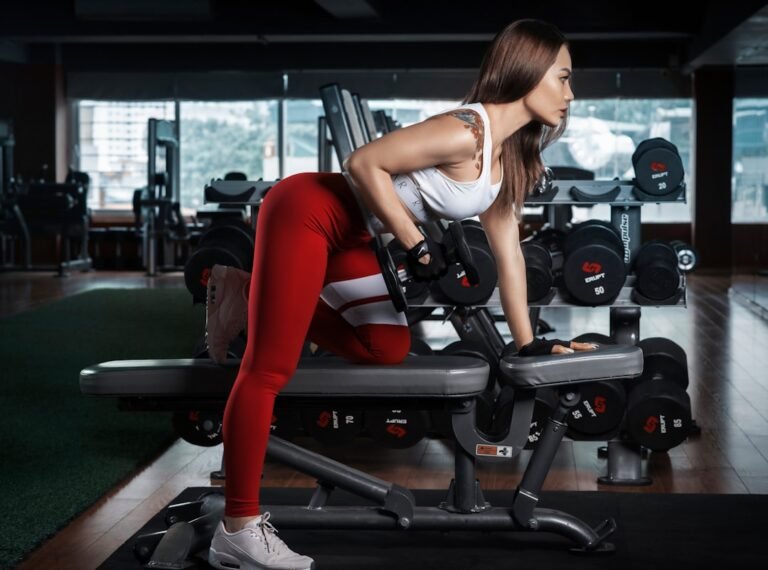
Place one knee and hand on a bench. Row a heavy dumbbell from arm extension to hip. Single-arm rows let you use heavier weight than bilateral rows and train anti-rotation core stability. Work toward rowing 60-70% of your bodyweight in one hand.
10. Dumbbell Floor Press — a safe pressing alternative when no bench is available.
Lie on the floor with bent knees. Press dumbbells from a 90-degree arm position to lockout. The floor limits your range of motion slightly, which actually reduces shoulder stress. This is one of the best home-friendly upper-body strength moves.
11. Farmers Carry — builds grip strength, core stability, and work capacity.
Pick up the heaviest dumbbells you own. Walk 30-50 metres without setting them down. Keep your shoulders back and core braced. This deceptively simple exercise builds grip, traps, and core strength simultaneously. Use dumbbells equal to 50-75% of your bodyweight total.
12. Dumbbell Sumo Squat — targets the inner thighs and glutes more than a standard squat.
Stand with feet wider than shoulder width and toes angled out. Hold one heavy dumbbell with both hands between your legs. Lower until thighs are parallel, then drive up. This variation emphasises the adductors and glutes in a way standard squats do not reach.
13. [REPLACE WITH A REAL PHOTO] — Arnold Press for shoulder strength and mobility.
[REPLACE WITH A REAL PHOTO — show yourself performing an Arnold press at home or in the gym. Caption: “The Arnold press is my go-to for building round, strong shoulders — Jake Reynolds, healthfitness-blog.com”]
Start with dumbbells at chin height, palms facing you. As you press overhead, rotate your palms outward until they face forward at the top. Reverse on the way down. This rotation recruits all three deltoid heads and improves shoulder mobility. Start with 15-20 lb and build steadily.
14. Dumbbell Lunge — builds single-leg strength and balance at the same time.
Step forward and lower your rear knee toward the floor. Return to standing. Alternate legs or complete all reps on one side first. Walking lunges add a cardiovascular element. Holding 25-40 lb dumbbells at your sides turns this into a serious strength movement.
15. Renegade Row — trains the back, core, and shoulders in one compound move.
Start in a plank with hands gripping two dumbbells. Row one dumbbell to your hip while balancing on the other. Alternate sides. This move demands significant core anti-rotation strength. Start with 20 lb dumbbells and prioritise keeping your hips square before adding weight.
Dumbbell Starting Weight Selector
Not sure where to start? Use this tool to get a recommended starting weight for your key lifts.
Dumbbell Equipment Comparison: Best Options by Budget
| Option | Price Range | Best For | Max Weight | Rating |
|---|---|---|---|---|
| Fixed cast iron dumbbells (set) | $50-$150 | Beginners, limited space | Up to 50 lb each | Good |
| Bowflex SelectTech 552 | $349 | Home gym, space-saving | 52.5 lb each | Excellent |
| PowerBlock Elite 50 | $299 | Compact, durable daily use | 50 lb each | Excellent |
| Ironmaster Quick-Lock | $495 | Serious strength training | 75 lb each | Best for strength |
| Rubber hex dumbbell set | $200-$400 | Full range, floor-friendly | Varies | Very Good |
| NordicTrack iSelect | $429 | Voice-controlled, app-linked | 50 lb each | Good |
5 Dumbbell Strength Training Mistakes to Avoid
- Using weights that are too light. If you can easily do 15 reps, the weight is too light for strength training. Move to a weight where 5-6 reps is a real challenge.
- Skipping the hinge pattern. Many people never do Romanian deadlifts or dumbbell deadlifts. This leaves the hamstrings and glutes seriously undertrained and creates injury risk.
- Neglecting unilateral work. Single-arm and single-leg exercises expose and fix strength imbalances that bilateral work masks.
- Not tracking progressive overload. If you are not writing down your weights and reps, you are guessing. Use a notebook or an app to track every set.
- Skipping rest days. Strength is built during recovery, not during the workout. Aim for at least one full rest day between strength sessions targeting the same muscle group.
Frequently Asked Questions
Can you really build strength with dumbbells only?
Yes. Dumbbells allow progressive overload, which is the key driver of strength gains. As long as you increase weight or reps over time, your muscles adapt and grow stronger. Many athletes build serious strength with dumbbell-only programs.
How heavy should dumbbells be for strength training?
For strength, choose a weight where you can do 4-6 reps with good form but cannot complete a 7th. This is heavier than typical toning weights. Most beginners start around 15-25 lb for upper body and 25-40 lb for lower body movements.
How many days a week should I do a dumbbell strength workout?
Three to four days per week is ideal for most people. This gives you enough training stimulus while allowing recovery. A push/pull/legs split or a full-body 3-day plan both work well with dumbbells only.
What dumbbell exercises build the most strength?
The best strength-building dumbbell exercises are goblet squats, Romanian deadlifts, dumbbell bench press, bent-over rows, overhead press, and Bulgarian split squats. These compound movements recruit the most muscle fibers and drive the greatest strength adaptations.
Do I need adjustable dumbbells for a strength program?
Not strictly, but they help a lot. Fixed dumbbells work if you have a range of weights. Adjustable sets like the Bowflex SelectTech 552 or PowerBlock Elite are a cost-effective home option that replaces an entire rack.
How long until I see strength gains from dumbbell training?
Most beginners notice measurable strength gains within 3-4 weeks. Early progress is largely neurological. Visible muscle changes often follow around weeks 6-8 with consistent training and enough protein intake.
Final Thoughts
Building strength with dumbbells only is completely achievable. The equipment is not the limiting factor. Your commitment to progressive overload, compound movements, and consistent training is what drives results. Start with the exercises in this guide, use the weight calculator, and track every session.
Focus on getting slightly stronger each week. Add 5 lb when you can hit the top of your rep range cleanly. Over 12 weeks, those small increments add up to real, measurable strength you can feel every day.
For more help building your program, check out our guides on how to structure a weekly workout plan, the best protein sources for muscle building, and how to recover faster after training.
Found this dumbbell strength guide helpful? Save it to your Fitness board on Pinterest so you can come back to it anytime!
Transparency notice: This post may contain affiliate links. If you purchase through a link on this page, we may earn a small commission at no extra cost to you. We only recommend products we have tested or genuinely trust. All workout advice is for informational purposes only. Consult a qualified trainer or physician before starting a new strength program.