Most people try meal prep once, spend four hours in the kitchen on a Sunday, feel exhausted by Tuesday, and never do it again. That’s not a willpower problem. That’s a system problem.
A proper beginner meal prep guide doesn’t ask you to cook restaurant-quality meals for seven days in one sitting. It gives you a repeatable 90-minute routine that gets real food on the table every weeknight without the daily scramble. This guide is that system.
By the end, you’ll know exactly what to buy, what to cook, in what order, and how to store it, so your first full week of meal prep actually happens and your second week feels easy.
Why 90 Minutes Is the Right Goal for Beginners
There’s a common beginner trap: watching meal prep content that shows someone cooking 20 different containers of identical chicken and rice. That approach works for competitive bodybuilders. It doesn’t work for most people who just want to eat better and stop relying on takeout.
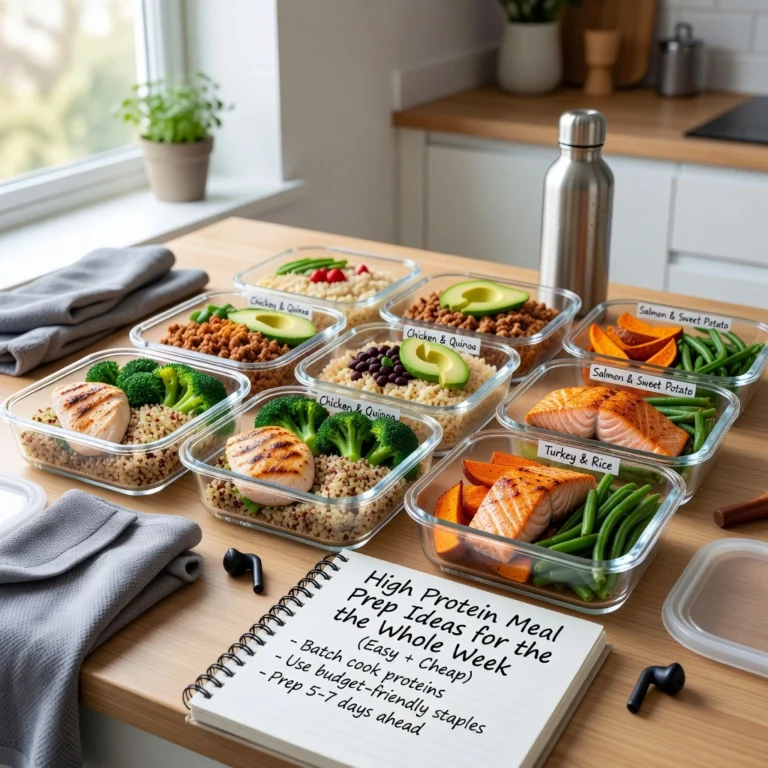
A 90-minute prep session covers the essentials: a protein, two or three vegetables, a grain, and some breakfasts or snacks. That’s enough structure to eat well all week without turning Sunday into a full-time job.
As you get faster (and you will), the same prep takes 60 minutes. For now, 90 is the honest, realistic target.
Equipment You Actually Need
You don’t need a professional kitchen. Most beginner meal prep fails because people try to do too much at once without the right containers or tools. Here’s what matters:
| Item | Why You Need It | Budget Pick |
|---|---|---|
| Large baking sheet (x2) | Roasting vegetables and protein at the same time | $12-15 each |
| Glass meal prep containers (set of 5-7) | Microwave-safe, no plastic leach, see-through | $25-35 for a set |
| Medium saucepan | Cooking grains (rice, quinoa, oats) | Already own one |
| Large skillet or fry pan | Sauteing vegetables, cooking eggs, browning protein | Already own one |
| Instant-read thermometer | Checking chicken is cooked through (165F/74C) | $10-12 |
| Sharp chef’s knife | Faster prep, safer cutting than a dull blade | $20-30 |
| Large cutting board | Working space for batch chopping | $15-20 |
If you already own most of this, your upfront cost is near zero. The glass containers are the one investment worth making if you haven’t already. They make reheating cleaner and help you actually see what you have in the fridge.
Your First Beginner Meal Prep Menu
The first rule of a beginner meal prep menu: choose foods you already like. This is not the time to experiment with exotic ingredients you’ve never cooked. Use this sample week as a template, then swap in your own preferences.
| Meal | Mon | Tue | Wed | Thu | Fri |
|---|---|---|---|---|---|
| Breakfast | Overnight oats | Overnight oats | Hard-boiled eggs + fruit | Hard-boiled eggs + fruit | Overnight oats |
| Lunch | Chicken + rice + broccoli | Chicken + rice + broccoli | Chicken + quinoa + roasted veg | Chicken + quinoa + roasted veg | Leftovers or salad |
| Dinner | Baked salmon + sweet potato | Stir-fry veggies + protein | Baked salmon + green beans | Stir-fry leftovers | Flex meal |
| Snack | Greek yogurt + berries | Apple + almond butter | Greek yogurt + berries | Nuts + fruit | Flex |
Notice the pattern: you’re not cooking something different every single day. Lunches repeat for two to three days. Dinners rotate. This is how meal prep actually saves time. If you want more variety, pair this plan with our guide to healthy meal ideas that keep you full.
The Beginner Grocery List
Buy this once and you have everything for the week. This list covers one person eating lunch and dinner from prep, with breakfasts and snacks included.
| Category | Items | Approx. Quantity |
|---|---|---|
| Protein | Boneless chicken breasts or thighs | 1.5 lbs (700g) |
| Protein | Salmon fillets | 2 fillets |
| Protein | Eggs | 1 dozen |
| Protein | Greek yogurt (plain, full-fat) | 32 oz container |
| Grains | White or brown rice | 2 cups dry |
| Grains | Quinoa | 1 cup dry |
| Grains | Rolled oats | 1 cup dry |
| Vegetables | Broccoli (fresh or frozen) | 1 large head or 16oz frozen |
| Vegetables | Mixed roasting veg (zucchini, bell pepper, onion) | 1 bag or 3-4 individual |
| Vegetables | Green beans (fresh or frozen) | 1 bag |
| Vegetables | Sweet potatoes | 2 medium |
| Fruit | Berries (fresh or frozen) | 1 pint fresh or 16oz frozen |
| Fruit | Apples or bananas | 4-5 pieces |
| Pantry | Olive oil, salt, pepper, garlic powder, paprika | Already stocked |
| Pantry | Almond butter or peanut butter | 1 jar |
| Pantry | Mixed nuts | Small bag |
Total cost runs $50-75 depending on where you shop. If budget is your main constraint, our guide to meal prep for the week on a budget covers how to do this for under $50.
The 90-Minute Meal Prep Schedule
This is where most beginner guides fail you: they tell you what to cook but not when to cook each thing. Cooking in the right order is how you actually finish in 90 minutes instead of three hours.
The key principle is parallel cooking: always have something in the oven while you’re active on the stovetop. You’re never idle.
| Time | Action | Notes |
|---|---|---|
| 0:00-0:10 | Preheat oven to 400F (200C). Wash and chop all vegetables. | Chop everything before cooking anything. Mise en place. |
| 0:10-0:15 | Season chicken with olive oil, salt, pepper, garlic powder. Place on baking sheet. | Thighs are more forgiving than breasts for beginners. |
| 0:15-0:20 | Toss chopped veg with olive oil and seasoning on second baking sheet. Put both trays in oven. | Chicken takes 25-30 min. Veg takes 20-25 min. |
| 0:20-0:25 | Start rice in saucepan. Set timer. | 2 cups water per cup of rice. Cover and simmer. |
| 0:25-0:35 | Hard boil eggs (cold water start, 10 min after boil). Prepare overnight oats in mason jars. | 3 jars: 1/2 cup oats, 1/2 cup milk, 1 tbsp chia seeds each. |
| 0:35-0:45 | Check oven. Remove vegetables when done (caramelized edges). Leave chicken until 165F internal temp. | Use a thermometer. Don’t guess on chicken. |
| 0:45-0:55 | Season and cook salmon in skillet (4-5 min per side). Steam or boil green beans (5-7 min). | Salmon is done when it flakes easily with a fork. |
| 0:55-1:05 | Remove chicken from oven. Rest 5 minutes, then slice or shred. | Slice thinly across the grain for easier reheating. |
| 1:05-1:20 | Portion everything into containers. Label with contents or day. | Cool to room temp before sealing (15-20 min). |
| 1:20-1:30 | Clean up. Wash cutting boards and knives. | Clean during wait times to keep total time down. |
The first time you run this schedule, it may take 100-110 minutes. That’s fine. By week three or four, you’ll move faster as the routine becomes familiar.
How to Store Your Meal Prep Safely
Good storage separates a week of fresh, safe food from a fridge full of soggy disappointment. Follow these guidelines exactly for your first few weeks:
| Food | Fridge (days) | Freezer | Storage Tip |
|---|---|---|---|
| Cooked chicken | 4-5 days | Up to 3 months | Store with a small splash of broth to prevent drying out |
| Cooked salmon | 3-4 days | Not recommended | Use within 3 days for best texture |
| Cooked rice/quinoa | 5-6 days | Up to 2 months | Flatten in freezer bags for quick defrost |
| Roasted vegetables | 4-5 days | Up to 3 months | Reheat at 375F for 8-10 min to restore texture |
| Hard-boiled eggs | 7 days (in shell) | Not recommended | Keep shells on until ready to eat |
| Overnight oats | 4-5 days | Not recommended | Add fresh fruit the morning you eat them |
| Cut fruit/vegetables | 3-5 days | Varies | Store in water (carrots, celery) or airtight container |
Protein: The Non-Negotiable Priority
If you only prep one thing each week, make it protein. Having prepped chicken, eggs, or fish ready removes the biggest daily decision point. For most people, getting enough high-protein foods consistently is the single highest-leverage nutrition habit for managing hunger, maintaining muscle, and supporting fat loss.
Aim for 0.7-1g of protein per pound of bodyweight per day. A 150-pound person needs roughly 105-150g daily. Two chicken thighs and two eggs covers about 60-70g, with Greek yogurt and dinner protein making up the rest. If you’re using meal prep specifically to support fat loss, our guide on high-protein diets for weight loss covers detailed macro targets.
Common Beginner Meal Prep Mistakes
Prepping too much variety
Five different lunches sounds appealing until you’re washing five different pans on Sunday afternoon. Start with two lunch options maximum. Add variety in week three or four once the routine is automatic.
Skipping the cooling step
Putting hot food directly into sealed containers creates condensation, speeds bacterial growth, and makes food soggy. Let everything cool to room temperature for 15-20 minutes before sealing and refrigerating.
Using the wrong containers
Thin plastic takeout containers leak, stain, and warp in the microwave. Glass containers with locking lids are worth the upfront investment because they make every reheating cleaner and every fridge-check faster.
Not seasoning before cooking
Meal-prepped food that tastes bland after three days is almost always food that wasn’t seasoned properly before cooking. Season proteins and vegetables generously before they go in the oven. Don’t be shy with salt and seasoning.
Leaving cleanup until the end
Wash cutting boards, knives, and mixing bowls during the oven wait times. This is 15-20 minutes of otherwise idle time. Use it and your 90 minutes of cooking won’t expand into two hours of total kitchen time.
How Meal Prep Supports Your Fitness Goals
Having prepped, portioned food available eliminates the decision fatigue that leads to poor choices on tired weeknights. It also makes it easier to hit consistent nutrition targets when you’re working toward specific goals.
For fat loss, meal prep combined with healthy eating habits creates a sustainable system rather than relying on willpower at 7pm after a long day. For building strength, having high-protein meals ready supports recovery from training and keeps your metabolism running efficiently. You can read more about foods that speed up metabolism naturally to build on these meals.
Scaling Up: What to Add in Week 3 and Beyond
Once the basic 90-minute session feels comfortable, you can expand in three directions:
- Add a second protein source: Ground turkey, canned tuna, or legumes (lentils, chickpeas) take very little extra prep time and add variety
- Add a breakfast batch: Egg muffins baked in a muffin tin during oven time last all week and take zero extra cooking time
- Add one sauce or dressing: A single homemade sauce applied differently each day (lemon tahini Monday, garlic yogurt Wednesday, simple vinaigrette Friday) makes the same prepped proteins taste completely different
The goal is never to make prep more complicated. It’s to make the 90-minute session gradually more efficient so the same time produces more variety and better food.
Frequently Asked Questions
How long does meal prepped food last in the fridge?
Most cooked proteins last 4-5 days refrigerated in airtight containers. Cooked fish is best within 3-4 days. Grains last 5-6 days. Plan to eat fish and delicate items earlier in the week and heartier proteins like chicken toward Thursday or Friday.
Can I meal prep in a small kitchen?
Yes. The 90-minute system works in any kitchen with one oven, one or two stovetop burners, and basic pots and pans. The order of operations does the heavy lifting: oven items first, stovetop during oven wait times, portioning at the end. You’re not cooking everything simultaneously.
Is it safe to reheat meal prep in plastic containers?
Only use containers labeled microwave-safe. Better yet, transfer food to a plate or use glass containers. Reheating in poorly rated plastics can leach chemicals into food, especially with fatty foods like salmon or chicken thighs.
What if I get bored eating the same thing?
The antidote is one variable per day: same protein and vegetables, different sauce or format. Prepped chicken can be a rice bowl with soy-ginger sauce Tuesday and a wrap with tzatziki Wednesday. You’re using the same building blocks, not eating the same meal.
How many calories should each meal prep meal be?
This depends on your goals and total daily target. As a rough guide for weight maintenance: 400-500 calories per lunch and 500-650 per dinner covers most people. If you’re working toward specific goals, track for one week using a free app like Cronometer to understand how your preps match your targets.
Can I freeze my meal prep?
Most components freeze well except fish, eggs, and dairy-based items. If you want to prep two weeks at once, freeze week two’s portions immediately after cooling, then transfer to the fridge Thursday of week one to defrost in time.
Start This Sunday
The most important thing about this beginner meal prep guide is not which specific foods you prep or which containers you use. It’s that you do it once and learn from it.
Your first session will take longer than 90 minutes. Something will overcook. You’ll run out of storage containers you didn’t realize you’d need. All of that is normal and all of it gets fixed by doing it again the following Sunday with slightly better information.
Pick one week of the menu above. Buy the groceries. Set aside 90 minutes on Sunday. Run through the schedule.
By the third or fourth week, 90 minutes will feel short. You’ll have built one of the most practical, high-return health habits available, not because you were particularly disciplined, but because you built a system that made the right choice easier than the wrong one every single weeknight.
Looking for a complementary fitness routine? Pair this with our best morning workout routine for beginners to build the exercise side of your healthy week.