You don’t need a gym, expensive equipment, or a personal trainer to lose weight and build a stronger, leaner body. What you need is a well-structured full body workout, enough consistency to see results, and realistic expectations about the timeline.
This guide gives you exactly that: a complete, science-backed full body home workout built specifically for women who want to lose weight and feel stronger — starting from wherever they are right now.
Why Full Body Workouts Work Better for Weight Loss
Full body workouts burn more calories per session by working more muscle groups simultaneously, which demands more energy both during and after the workout (via the EPOC afterburn effect). They also create muscle balance, reduce injury risk over time, and are more flexible — when life gets busy and you can only work out twice a week, you’ve still hit every muscle group at least once.
A Note on Strength Training for Women
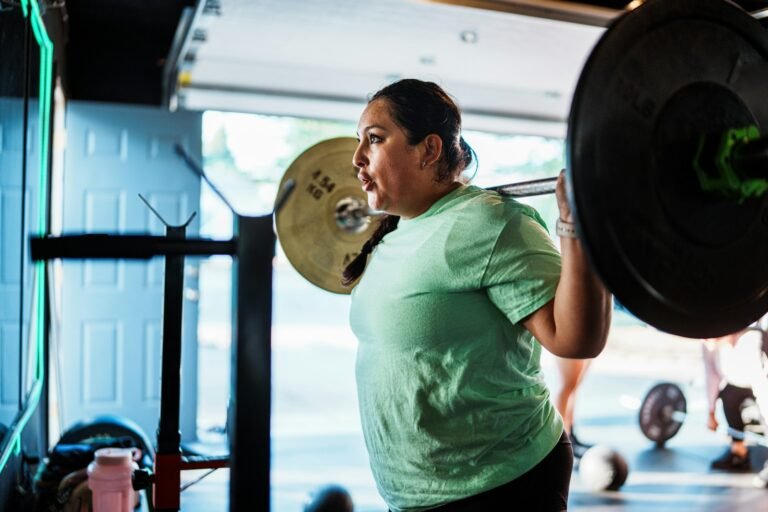
One of the most persistent myths in women’s fitness is that lifting weights will make you “bulky.” It won’t. Women simply don’t have the testosterone levels required to build significant mass. What strength training does is build lean muscle, which increases your resting metabolic rate (meaning you burn more calories even at rest), improves bone density, and gives your body the toned, defined look most women are actually aiming for.
The Full Body Home Workout
Warm-Up (5 Minutes)
Spend about 60 seconds on each: arm circles (forward and backward), hip circles, leg swings (front-to-back and side-to-side), marching in place with high knees, and slow bodyweight squats. Never skip the warm-up — it significantly reduces injury risk and primes your muscles for the work ahead.
The Workout
Complete 3 rounds of the following circuit. Rest 45 seconds between exercises and 90 seconds between full rounds. Total time: approximately 35 to 40 minutes.
Exercise 1: Squats — 15 Reps
The squat is the cornerstone of lower body training. It works your quads, hamstrings, glutes, and core simultaneously. Stand with feet shoulder-width apart, toes slightly out. Push your hips back and bend your knees until thighs are parallel to the floor. Keep your chest up and weight in your heels. Drive back to standing.
Modification: Squat to a chair — lower until your hips touch the seat, then stand back up.
Exercise 2: Push-Ups — 10 to 12 Reps
Push-ups build upper body strength (chest, shoulders, triceps) and require significant core engagement to maintain proper form. Start in a high plank with hands slightly wider than shoulder-width. Keep your body in a straight line from head to heels. Lower your chest toward the floor, then push back up.
Modification: Perform push-ups from your knees, keeping the same straight line from knees to shoulders.
Exercise 3: Glute Bridges — 15 Reps
Glute bridges directly target the glutes and hamstrings — often underactivated, particularly in women who sit for long periods. Lie on your back with knees bent and feet flat on the floor, hip-width apart. Press through your heels and squeeze your glutes to lift your hips until your body forms a straight line from shoulders to knees. Hold 1 second at the top, then lower.
Progression: Extend one leg and drive up through the planted foot for a single-leg glute bridge.
Exercise 4: Reverse Lunges — 12 Reps Per Leg
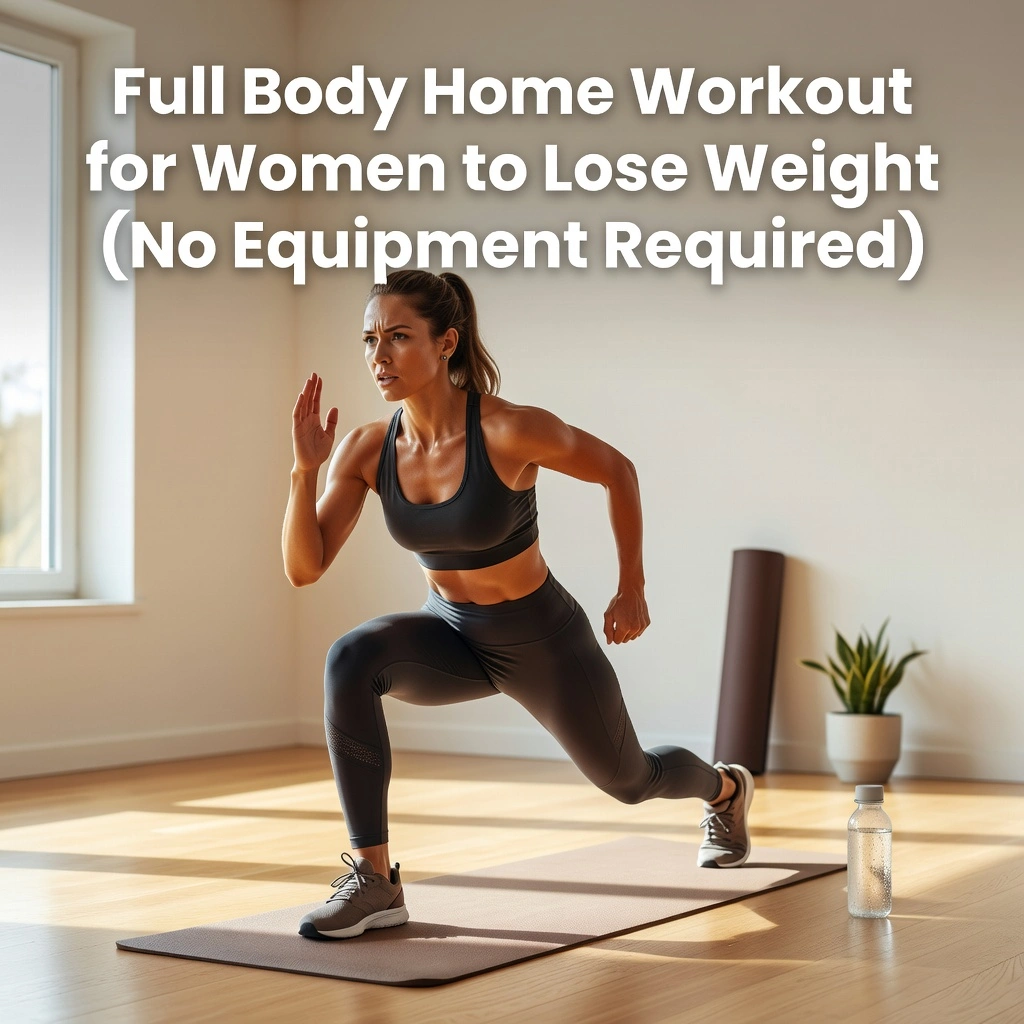
The reverse lunge is gentler on the knees than forward lunges, making it a better choice for most beginners while still building leg strength and challenging balance. Stand tall. Step one foot back and lower your back knee toward the floor until both knees are at roughly 90 degrees. Push through the front heel to return to standing. Alternate legs.
Exercise 5: Plank Hold — 30 to 45 Seconds
The plank is the most efficient core exercise you can do. Rise onto your forearms and toes. Keep your body in a perfectly straight line — hips level, core braced, glutes squeezed. Breathe steadily. Don’t hold your breath.
Modification: Drop to your knees if needed.
Exercise 6: Mountain Climbers — 30 Seconds
Mountain climbers combine cardio with core work, making them one of the most efficient fat-burning exercises in this workout. From a high plank position, drive one knee toward your chest, then quickly switch legs. Keep your hips down and your core tight. Move at a pace that challenges your heart rate.
Exercise 7: Tricep Dips (using a chair) — 12 Reps
Sit on the edge of a sturdy chair. Place your hands on the seat beside your hips, fingers pointing forward. Slide your hips off the edge and bend your elbows to lower your body toward the floor. Press back up. Keep your back close to the chair throughout. Strong triceps improve posture and shoulder health.
Exercise 8: Superman Hold — 12 Reps (2-second hold each)
The Superman targets the posterior chain — glutes, lower back, and hamstrings — which is often neglected in workout programs. Lie face-down with arms extended overhead. Simultaneously lift your arms, chest, and legs off the floor by squeezing your glutes and back muscles. Hold for 2 seconds, then lower.
Cool-Down (5 Minutes)
Cooling down reduces muscle soreness and improves flexibility over time. Hold each stretch for 30 seconds: standing quad stretch, seated hamstring stretch, pigeon pose or figure-four glute stretch, chest opener (clasp hands behind back, open chest toward ceiling), and child’s pose.
How Many Times Per Week?
For weight loss and general fitness, 3 sessions per week with at least one rest day between sessions is the recommended starting point. As you get stronger after 4 to 6 weeks, consider adding a fourth session or increasing reps and hold times within each exercise.
A 4-Week Progression Plan
One of the most common mistakes is doing the exact same workout week after week without progression. Your body adapts quickly, and progress stalls when the challenge doesn’t increase. Here’s a simple way to advance over your first month:
Weeks 1–2: Complete the workout as written — 3 rounds, with all listed reps and rest times. Focus on learning the movements with good form rather than pushing intensity. If exercises feel too challenging, use the beginner modifications.
Weeks 3–4: Reduce rest between exercises from 45 seconds to 30 seconds. Increase plank hold time from 30 to 45 seconds. Add 2 to 3 reps to each strength exercise (squats: 18 reps, push-ups: 13 to 15, reverse lunges: 14 per leg).
After week 4: Add a 4th round to the circuit, or introduce a 4th training day per week. You can also begin adding light dumbbells to squats and lunges to increase resistance.
What to Pair With This Workout
Exercise alone rarely produces dramatic weight loss without attention to nutrition. Aim for a modest calorie deficit (200 to 400 calories below your maintenance level), prioritize protein at every meal to preserve lean muscle, drink at least 6 to 8 glasses of water daily, and get 7 to 9 hours of sleep. Sleep deprivation increases hunger hormones and makes fat loss significantly harder.
Progress Looks Different for Everyone
Weight on a scale is an imperfect measure of progress. Muscle weighs more than fat, so the scale can stay the same or even go up slightly while your body composition improves dramatically. Take progress photos, note how your clothes fit, and pay attention to energy levels and strength improvements. Give this program at least 8 weeks of consistent effort before evaluating. Results take longer than most people expect but come more reliably than most people believe.
Frequently Asked Questions
Can beginners do this workout?
Yes. Every exercise includes a beginner modification. If you’re new to working out, start with the modified versions and use the easier rep counts. Focus on form over speed in your first two weeks.
How long until I see results?
Most women notice improvements in energy, strength, and how their clothes fit within 3 to 4 weeks. Visible changes in body composition typically take 6 to 8 weeks of consistent training and nutrition. The scale may not move much initially as you build muscle.
Should I do cardio in addition to this workout?
It depends on your goals and recovery capacity. This workout already includes cardio elements (mountain climbers, the circuit format). Adding 2 to 3 sessions of light cardio (walking, cycling, or a short HIIT session) per week will accelerate fat loss, but rest days are equally important.
Is this workout suitable during pregnancy?
Consult your healthcare provider before exercising during pregnancy. Many of these exercises can be modified for pregnancy, but this guide is not specifically designed for prenatal fitness.