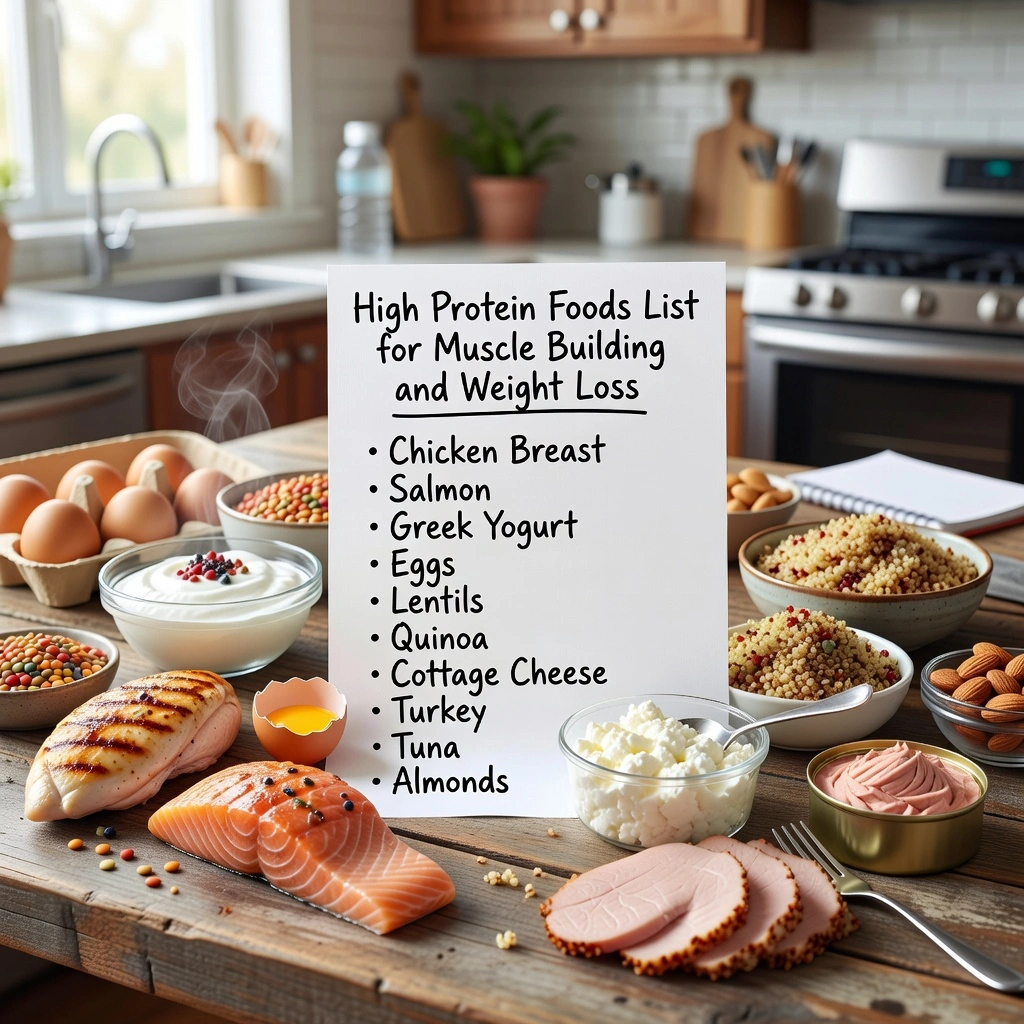
High Protein Foods List for Muscle Building and Weight Loss
By Jake Reynolds | Certified Personal Trainer and Nutrition Coach | Last updated: May 2, 2026 | 10 min read
Save this high protein foods list to your Nutrition board on Pinterest. Your meal planning just got a whole lot easier!
Protein is the single most important macronutrient for changing your body. It builds muscle, keeps you full, preserves lean mass during fat loss, and has the highest thermic effect of any food — meaning your body burns more calories just digesting it. But knowing which foods are actually high in protein, and how much they deliver per serving, is where most people get confused.
This high protein foods list cuts through the noise. Every food is ranked by actual protein content per serving, split into animal and plant-based categories, with practical notes on cost, versatility, and how to use each one.
A quick note from Jake
After 10 years of coaching, the number one nutrition mistake I see is people underestimating how much protein they actually eat — versus how much they think they eat. Most people consuming a “high protein diet” are getting about 80g per day. Most active adults need at least 140g. Tracking for just one week changes everything.
Quick Answer: Highest Protein Foods Per Serving
- Chicken breast (cooked, 150g): 46g protein
- Canned tuna (185g tin): 44g protein
- Lean beef (150g cooked): 38g protein
- Salmon fillet (150g): 34g protein
- Greek yoghurt (200g): 20g protein
Table of Contents
- How Much Protein Do You Actually Need?
- Top Animal-Based Protein Foods
- Top Plant-Based Protein Foods
- Dairy and Eggs
- Best High Protein Foods on a Budget
- Protein Mistakes to Avoid
- Frequently Asked Questions
How Much Protein Do You Actually Need?
Most people need far more protein than they think — and most eat far less than they assume.
Current evidence-based recommendations for active adults are 1.6 to 2.2g of protein per kilogram of body weight per day. For a 75kg person, that is 120g to 165g of protein every day — not a small amount.
For weight loss, staying at the higher end (2g per kg) is smart. More protein means more satiety, less muscle loss during a calorie deficit, and a higher metabolic rate.
| Body Weight | Minimum (1.6g/kg) | Optimal (2g/kg) |
|---|---|---|
| 60 kg | 96g/day | 120g/day |
| 75 kg | 120g/day | 150g/day |
| 90 kg | 144g/day | 180g/day |
| 100 kg | 160g/day | 200g/day |
Top Animal-Based Protein Foods
1. Chicken Breast
The gold standard of high protein foods — lean, versatile, and affordable at around $6 to $10 per kg. A 150g cooked chicken breast delivers approximately 46g of protein with only 3g of fat and 240 calories. It absorbs flavours well and works in virtually any meal.
2. Canned Tuna
The most convenient high protein food you can buy — no cooking required. A standard 185g tin of tuna in water contains 44g of protein and costs under $2. It is shelf-stable, portable, and mixes into salads, sandwiches, and pasta in two minutes flat.
3. Lean Beef (95% Lean Mince)
High protein and rich in iron, zinc, and B12 — nutrients plant proteins often lack. A 150g serving of cooked lean beef mince delivers roughly 38g of protein. Choose 95% lean mince to keep the fat and calorie count in check.
4. Salmon and Oily Fish
Protein plus omega-3 fatty acids — one of the most nutritionally complete foods on this list. A 150g salmon fillet provides 34g of protein along with anti-inflammatory omega-3s that support joint health and recovery. Aim for two servings of oily fish per week.
5. Turkey Breast
Often overlooked, turkey breast is actually one of the leanest, highest-protein meats available. A 150g cooked serving provides around 42g of protein with very little fat. Turkey mince is a great alternative to beef in bolognese and chilli.
Top Plant-Based Protein Foods
6. Lentils
The best plant-based protein source per gram of cost — and also packed with fibre, iron, and folate. One cup of cooked lentils contains 18g of protein. Red lentils cook in 15 minutes with no soaking needed and thicken soups and curries naturally.
7. Edamame
One of the few plant proteins that is a complete amino acid source — meaning it contains all essential amino acids. One cup of shelled edamame provides 17g of protein. Available frozen in most supermarkets, they make an excellent high-protein snack.
8. Black Beans and Chickpeas
Affordable, filling, and rich in protein and complex carbohydrates — ideal for plant-based eaters on a budget. One cup of cooked black beans contains 15g of protein. Chickpeas (14g per cup) work equally well. Both are high in fibre, which extends satiety.
9. Tofu and Tempeh
Tofu delivers 10g of protein per 100g; tempeh outperforms it at 19g per 100g — making tempeh one of the highest plant proteins available. Both absorb flavours brilliantly when marinated. Tempeh is also fermented, adding probiotic benefits.
10. Hemp Seeds and Pumpkin Seeds
Easy to add to anything — 3 tablespoons of hemp seeds deliver 10g of complete protein. Pumpkin seeds provide 9g per 30g serving. Sprinkle them on yoghurt, porridge, or salads for an effortless protein boost.
Dairy and Eggs
11. Eggs
One of the most bioavailable protein sources on the planet — your body absorbs over 90% of the protein in a cooked egg. Two large eggs provide 12g of protein, plus choline, vitamin D, and healthy fats. Eat the yolks — the nutrition is in there.
12. Greek Yoghurt
A 200g serving of full-fat Greek yoghurt contains around 20g of protein — and it counts as a snack, a breakfast, or a cooking ingredient. Choose plain Greek yoghurt over flavoured varieties to avoid added sugar. Add berries and a tablespoon of hemp seeds for a 25g protein snack.
13. Cottage Cheese
Massively underrated — 200g of cottage cheese provides 24g of protein at under 200 calories. Cottage cheese is slow-digesting (casein protein), making it ideal before bed to support overnight muscle repair. Mix it with pineapple or cucumber for a simple, filling meal.
Best High Protein Foods on a Budget
| Food | Protein per serving | Approx. cost per serving |
|---|---|---|
| Canned tuna | 44g | $1.50 |
| Eggs (2) | 12g | $0.50 |
| Lentils (cooked cup) | 18g | $0.30 |
| Cottage cheese (200g) | 24g | $1.20 |
| Chicken breast (150g) | 46g | $1.80 |
| Greek yoghurt (200g) | 20g | $1.00 |
5 Protein Mistakes to Avoid
- Relying on one or two sources. Variety ensures you get a full spectrum of amino acids, vitamins, and minerals. Rotate between at least 5 different protein foods per week.
- Forgetting breakfast protein. Most people eat very little protein at breakfast and overload at dinner. Spreading protein evenly across meals (30 to 40g per meal) is far more effective for muscle protein synthesis.
- Assuming processed “high protein” products are equal. A protein bar with 15g of protein and 25g of sugar is not the same as 15g from Greek yoghurt. Prioritise whole food sources.
- Undereating on training days. Your protein needs are highest on the days you train. Do not cut calories on workout days hoping to accelerate fat loss — it backfires on muscle retention.
- Ignoring leucine content. Leucine is the amino acid that triggers muscle protein synthesis. Animal proteins are naturally rich in it. If you are plant-based, prioritise soy, lentils, and pumpkin seeds, which have the highest leucine among plant foods.
Frequently Asked Questions
What foods are highest in protein?
The highest protein foods per 100g are chicken breast (31g), canned tuna (29g), cottage cheese per 100g, Greek yoghurt, eggs, and lean beef. Whey protein powder is the most concentrated source at around 80g per 100g.
How much protein do I need per day?
For muscle building, aim for 1.6 to 2.2g of protein per kilogram of body weight. For weight loss, 1.6g per kg helps preserve muscle. A 70kg person would need roughly 112 to 154g of protein daily.
What are the best plant-based protein foods?
The best plant-based protein sources include lentils (18g per cooked cup), edamame (17g per cup), tofu (10g per 100g), black beans (15g per cup), and hemp seeds (10g per 3 tablespoons).
Is chicken or beef better for protein?
Chicken breast has a slight edge for protein density — 31g per 100g versus 26 to 28g for lean beef. However, beef provides more iron and zinc. Both are excellent protein sources. Choice depends on your dietary goals and preference.
Can I get enough protein without meat?
Yes. Combining legumes, dairy, eggs, tofu, and high-protein grains like quinoa makes reaching protein targets achievable without meat. It requires more planning but is entirely doable.
Does cooking destroy protein in food?
Cooking does not destroy protein. It changes the structure (denaturation) but the amino acids remain fully intact and are actually easier to absorb when cooked, particularly in eggs and meat.
Final Thoughts
Building a diet around high protein foods does not have to be expensive or complicated. Chicken breast, eggs, canned tuna, lentils, and Greek yoghurt alone can meet most people’s protein targets at minimal cost.
Pick three or four staples from this list, build your meals around them, and you will be eating more protein than most people manage in a week. That is the real competitive advantage.
For related reading, check out our guides on high protein meal prep ideas for the whole week, what to eat before and after a workout, and daily habits for weight loss that actually work.
Found this list useful? Pin it to your Nutrition or Meal Prep board on Pinterest to reference whenever you need it!
Jake Reynolds
Certified Personal Trainer and Nutrition Coach
Jake Reynolds is a certified personal trainer and nutrition coach with over 10 years of experience helping people build sustainable fitness habits. He specialises in home workouts, fat loss strategies, and evidence-based nutrition advice that fits real life.
Disclosure: This post may contain affiliate links. If you purchase through these links, we may earn a small commission at no extra cost to you. We only recommend products we genuinely use and trust.