
Starting a workout routine is easy. Almost everyone has done it. Keeping one going is the hard part — and most fitness advice completely misses why people actually quit.
It’s not laziness. It’s not lack of willpower. It’s that most people try to build a habit the wrong way from the start. Here’s what the science of habit formation actually says, and how to use it to build a workout routine you’ll still be doing six months from now.
Why Most Workout Habits Fail in the First Month
The most common mistake: people go from zero to five days a week at the gym, doing hour-long sessions, during the first week of January. They’re motivated, they’re excited, and within three weeks they’ve quit. This isn’t a character flaw — it’s a design flaw.
A habit is a behavior that becomes automatic through repetition in a consistent context. The key word is automatic. You don’t decide to brush your teeth — you just do it. The goal with working out is to eventually get to that same place. But you can’t brute-force your way there with sheer motivation, because motivation fluctuates. Systems don’t.
Start Embarrassingly Small
Habit researcher BJ Fogg found that the most reliable way to build a lasting behavior is to make the starting version so small it feels almost ridiculous. Instead of “I’ll work out for an hour every day,” try “I’ll do 10 minutes of movement three times a week.” That sounds too easy. That’s exactly the point.
When a habit feels easy, you actually do it. When you do it consistently, your brain starts to encode it as a routine. Once it’s routine, you can gradually expand it. The rule: never miss the behavior, even if you have to shrink it down to almost nothing on a hard day. A 5-minute walk still counts.
Attach Your Workout to Something You Already Do
One of the most effective habit-building techniques is called habit stacking — linking a new behavior to an existing one. The formula is: “After I [existing habit], I will [new habit].”
- “After I pour my morning coffee, I will put on my workout clothes.”
- “After I finish work at 5 PM, I will go directly to the gym.”
- “After I brush my teeth at night, I will lay out my workout gear for tomorrow.”
The existing habit acts as a reliable trigger. You’re not relying on remembering or feeling motivated — the behavior just follows automatically.
Design Your Environment for Success
Willpower is a limited resource. The people who seem to have the most discipline aren’t necessarily stronger-willed — they’ve set up their environment so they need less willpower in the first place.
Reduce friction. Sleep in your workout clothes if you exercise in the morning. Keep your gym bag packed and by the door. Every extra step between you and starting your workout is an opportunity to talk yourself out of it.
Use visual cues. Leave your running shoes next to your bed. Put your resistance bands on your desk. Visual cues trigger behavior more reliably than phone reminders.
Track Progress Visibly
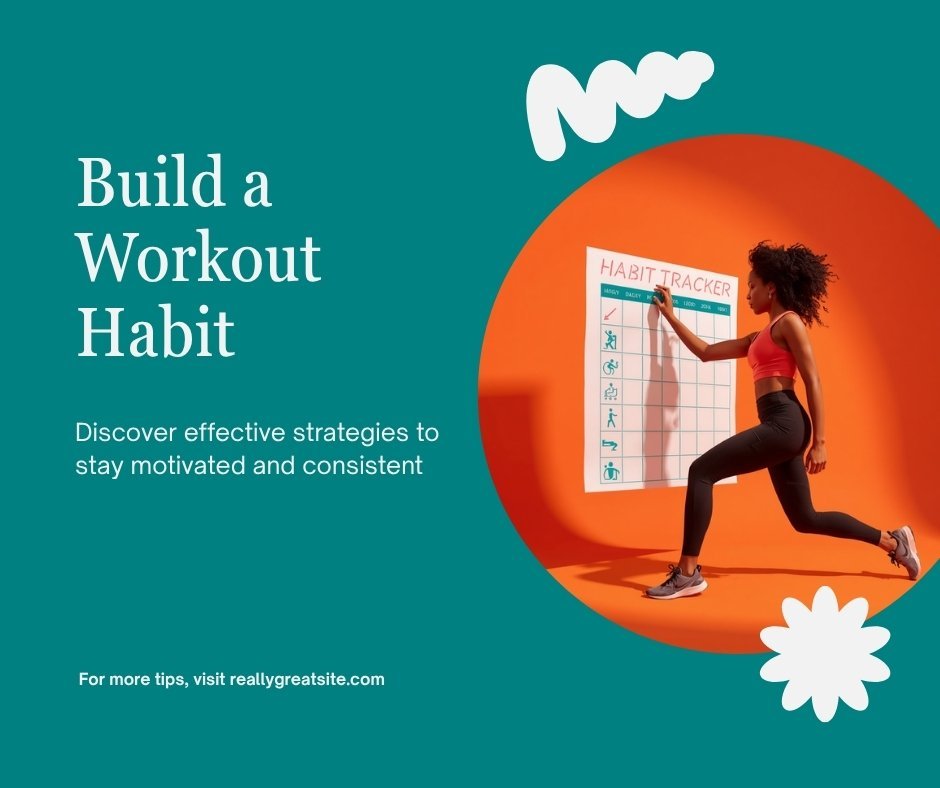
Jerry Seinfeld used a wall calendar to build his writing habit. Every day he wrote, he put an X on the calendar. His only goal was “don’t break the chain.” Apply the same principle to your workouts. Use a paper calendar, a habit tracking app, or a simple note in your phone. Mark every workout. Watch the streak grow. What gets measured gets maintained.
Plan for the Hard Days
The days you least want to work out are the days your habit is built or broken. Ask yourself now: “When I feel tired, stressed, or unmotivated, what is the minimum version of my workout that I will still do?” Have that answer ready. Maybe it’s a 10-minute walk. Maybe it’s just showing up and doing one set of each exercise. The bar just needs to be low enough that you can clear it on your worst day.
Build in Accountability
A study published in the American Journal of Preventive Medicine found that people who checked in with a support system exercised significantly more often than those working out alone. Options include a workout buddy, a fitness class with a set schedule, an online community, or simply texting a friend after each session. The mechanism matters less than the consistency.
What If You Miss a Day?
Missing one workout is not a problem. Missing two in a row is where habits start to erode. Research by Phillippa Lally at University College London found that missing a single occasion had no meaningful impact on long-term habit formation — but consecutive misses compound quickly into complete abandonment.
The rule is simple: never miss twice. If you miss Monday’s workout, Tuesday becomes non-negotiable — even if it’s the shortened version. The habit isn’t broken until you decide it is.
Also worth noting: guilt about missed workouts is counterproductive. People who beat themselves up over a missed session are statistically more likely to miss the next one too, because shame activates avoidance rather than motivation. Acknowledge the miss, move on, and show up tomorrow.
Be Patient with the Timeline
Research suggests it takes anywhere from 18 to 254 days to form a habit, with an average around 66 days. Give your routine at least two to three months of consistent effort before you judge whether it has “stuck.” The early discomfort is normal — it’s a sign you’re exactly where you should be in the process.
Make It Rewarding
Every habit has three parts: a cue, a routine, and a reward. Build in a genuine reward for completing your workout — a favorite podcast you only listen to during workouts, a post-workout ritual you enjoy. Over time, the internal rewards (energy, mood, confidence) will be enough. But in the beginning, give yourself something to look forward to.
Frequently Asked Questions
How long does it take to build a workout habit?
Research places the average at around 66 days, though it varies widely between individuals. Give yourself at least 8 to 12 weeks before evaluating whether the habit has solidified.
What if I don’t have time to work out?
Start smaller than feels reasonable. Ten minutes counts. Three times a week counts. The point is to establish the behavior pattern — you can always increase duration later once showing up is no longer the hard part.
Should I work out at the same time every day?
Yes, if possible. Consistency in timing helps anchor the habit to a context cue (morning, lunch break, after work), which makes the behavior more automatic over time.
Summary
Build your workout habit in this order: start small, stack it onto an existing behavior, reduce environmental friction, track your streak, plan for hard days, add accountability, and reward yourself consistently. Choose sustainability over ambition, at least until the habit is locked in. You can always do more once showing up is no longer the hard part. And don’t underestimate your environment — a tidy, organised home workout space removes one more excuse and makes it far easier to stay consistent.