Healthy smoothie recipes for energy and weight loss are easy to find, but many of them are sugar bombs in disguise. A smoothie can be a smart, filling part of your day, or it can be a 600-calorie dessert in a glass. The difference comes down to what goes in the blender. This guide gives you a simple formula, six beginner-friendly recipes, and the mistakes to avoid.
One note before we start: no single drink burns fat or guarantees weight loss. Smoothies help when they replace less satisfying options and fit your overall eating pattern. If you have a medical condition, take medication, or have blood sugar concerns, check with a healthcare professional before changing how you eat.
Why smoothies can work for energy and weight management
A well-built smoothie is a fast way to combine protein, fibre, and fruit or vegetables in one portion. That combination matters because protein and fibre both help you feel full for longer, which can make it easier to eat sensibly through the rest of the day. Many people also find a smoothie is the only realistic breakfast on a rushed morning.
For energy, the goal is steady fuel rather than a spike and crash. Fruit alone digests quickly. Adding protein, healthy fat, and fibre slows things down, so the energy tends to last longer. This is the same principle behind balanced meals, which we cover in our guide to healthy eating habits for weight loss.
Fruit and vegetables also count towards your daily intake. Health bodies such as the NHS recommend at least five portions a day, and blending is one practical way to get closer to that target. Keep in mind that blended fruit releases sugars from the cell walls, so portion size still matters.
The simple smoothie formula
You do not need a recipe for every smoothie. Use this five-part formula and swap ingredients based on what you have. Aim for a total of roughly 250 to 400 calories if the smoothie is a snack or light breakfast, and a little more if it replaces a full meal.
- Liquid (1 cup): water, unsweetened almond or soy milk, dairy milk, or cold green tea.
- Protein (20 to 30 grams): Greek yoghurt, protein powder, silken tofu, or cottage cheese. See our list of high protein foods for more ideas.
- Fibre-rich carbs (about 1 cup): berries, banana, oats, or a small amount of other fruit.
- Greens or veg (a handful): spinach, kale, cucumber, or frozen cauliflower rice, which is surprisingly mild.
- Healthy fat (1 tablespoon): chia seeds, ground flax, nut butter, or a quarter of an avocado.
Calorie counts depend on brands and portions, so treat the numbers in this article as rough ranges rather than exact values. Check the labels on your own ingredients if you track intake.
How to blend it step by step
Order matters more than most beginners expect. A smooth result comes from loading the blender in the right sequence, and it takes under five minutes once you have done it a couple of times.
- Pour in the liquid first so the blades can move freely.
- Add powders, seeds, and oats next, so they blend into the liquid instead of sticking to the sides.
- Add yoghurt, soft fruit, and greens.
- Top with frozen fruit or ice, which pushes everything down toward the blades.
- Blend on low for 10 seconds, then high for 30 to 60 seconds, until no flecks remain.
- Taste, then adjust. Too thick? Add a splash of liquid. Too thin? Add a few more frozen pieces or a spoonful of oats.
You do not need an expensive machine. A basic blender works well if you blend a little longer and chop harder ingredients first.
6 healthy smoothie recipes for energy and weight loss
Each recipe below makes one large serving. Blend the liquid first, then the soft ingredients, then anything frozen, and add ice last if you want it thicker.
1. Berry protein power smoothie
Best for a post-workout snack or a fast breakfast.
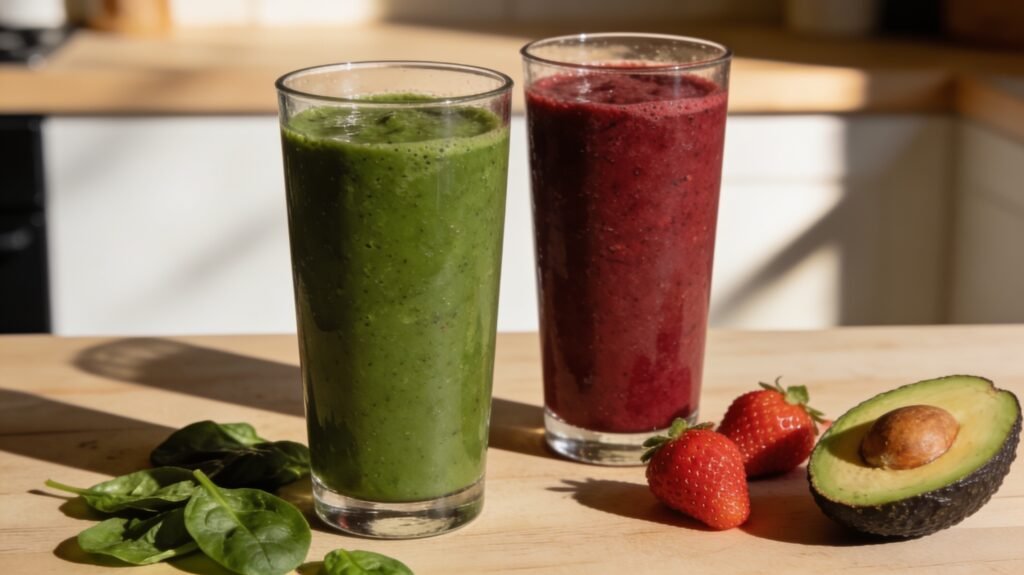
1 cup unsweetened soy or dairy milk, 3/4 cup frozen mixed berries, 3/4 cup plain Greek yoghurt, 1 tablespoon chia seeds, and a handful of spinach. The berries bring fibre and natural sweetness, while the yoghurt supplies most of the protein. Roughly 250 to 320 calories.
2. Green energy smoothie
Best for a mid-morning pick-me-up.
1 cup water or coconut water, 1 cup spinach, half a frozen banana, half a green apple, a small piece of cucumber, and a squeeze of lemon. Add a scoop of protein powder if you want it to last. Roughly 150 to 250 calories, depending on the protein.
3. Peanut butter oat smoothie
Best before a morning workout.
1 cup milk of choice, 1/3 cup rolled oats, half a banana, 1 tablespoon peanut butter, and a pinch of cinnamon. The oats give slow-release carbohydrate and the peanut butter adds satisfying fat. Roughly 350 to 420 calories, so this one suits a small meal better than a snack.
4. Tropical cauliflower smoothie
Best if you want volume without many calories.
1 cup unsweetened almond milk, 1/2 cup frozen cauliflower, 1/2 cup frozen mango or pineapple, 3/4 cup Greek yoghurt, and a little ginger. The cauliflower thickens it and adds fibre with almost no taste. Roughly 220 to 300 calories.
5. Chocolate cherry recovery smoothie
Best after a hard session.
1 cup milk, 3/4 cup frozen cherries, 1 tablespoon unsweetened cocoa powder, 1 scoop chocolate protein powder, and a few ice cubes. It tastes like a treat while still delivering protein. Roughly 250 to 330 calories. For more on post-training food, read what to eat before and after a workout.
6. Avocado spinach smoothie
Best for a savoury, low-sugar option.
1 cup unsweetened soy milk, a quarter of an avocado, 1 cup spinach, half a cup of frozen pineapple, a squeeze of lime, and a scoop of vanilla protein powder. The avocado makes it creamy and adds fat that keeps you full. Roughly 280 to 350 calories.
Common smoothie mistakes that undo your effort
Most smoothie disappointment comes from a handful of repeat errors. Fix these and your results with any recipe will improve.
- Too much fruit. Three bananas and a mango is a lot of sugar. Stick to about one cup of fruit per serving.
- Juice as the base. Fruit juice adds sugar and removes the fibre benefit. Use water or milk instead.
- No protein. Without it, many people are hungry again within an hour or two.
- Hidden extras. Honey, syrups, sweetened yoghurt, and large spoonfuls of nut butter add calories quickly.
- Oversized portions. A 700 ml glass can easily pass 500 calories. Measure your ingredients for the first few weeks.
Smoothie or meal replacement: which is right for you?
For most beginners, a smoothie works best as a breakfast, snack, or post-workout option rather than a replacement for every meal. Whole foods take longer to eat, which helps with fullness, and they offer more variety. If you want filling options for other meals, browse our healthy meal ideas that keep you full.
Be cautious about plans that replace several meals a day with shakes, especially very low calorie ones. The Mayo Clinic stresses gradual, sustainable changes over quick fixes. People who are pregnant, have diabetes, or take medication should talk to a doctor or registered dietitian before relying on liquid meals.
Fitting smoothies into your day
Timing is flexible, so choose what suits your routine. Here are three common ways beginners use them.
- Breakfast: Pick a recipe with at least 20 grams of protein, such as the berry protein or avocado spinach smoothie, and add a slice of wholegrain toast if you are still hungry.
- Pre-workout: Have a lighter, carbohydrate-focused option like the peanut butter oat smoothie about 60 to 90 minutes before training, so it has time to settle.
- Afternoon snack: A smaller green or tropical smoothie can stop you reaching for vending machine snacks when energy dips.
Notice how you feel for a couple of weeks. If a recipe leaves you hungry, add protein or fibre. If it leaves you uncomfortably full, shrink the portion. Your own experience is the best feedback you have.
Prep and storage tips
- Pre-portion ingredients into freezer bags: fruit, greens, oats, and seeds. In the morning, just add liquid and protein and blend.
- Freeze overripe bananas in chunks. They add creaminess without needing ice.
- Store a blended smoothie in a sealed jar in the fridge for up to about 24 hours. Shake or stir before drinking, as it separates.
- Buy frozen fruit and vegetables. They are picked ripe, cost less, and cut down on waste. Our budget meal prep guide shows how to fit this into a weekly shop.
Frequently asked questions
Are smoothies good for weight loss?
They can help when they are balanced and replace higher-calorie choices. A smoothie with protein, fibre, and controlled portions may keep you fuller than a pastry. Weight change still depends on your overall eating, activity, sleep, and individual health.
What should I put in a smoothie for energy?
Combine slower carbohydrates like oats or berries with protein and a little healthy fat, such as chia seeds or nut butter. This pairing digests more slowly than fruit alone, which can help you avoid a quick spike followed by a slump.
Can I drink a smoothie every day?
For most healthy adults, a daily smoothie is fine if it is balanced and fits your calorie needs. Rotate ingredients, especially leafy greens, to vary nutrients. If you have a health condition, ask your healthcare professional what suits you.
Should I use protein powder?
It is optional. Greek yoghurt, cottage cheese, or silken tofu provide protein from whole foods. Powder is convenient if you struggle to reach your protein target. Choose a product with a short ingredient list and check with a professional if you have kidney concerns.
Start with one recipe this week, adjust it to your taste, and let the formula do the rest. Small, repeatable habits beat dramatic plans every time.
\n\n\n