Healthy Meal Ideas for Weight Loss That Are Actually Filling
The reason most healthy eating plans collapse isn’t lack of discipline. It’s being hungry all the time. You can white-knuckle a calorie deficit for a few weeks, but chronic hunger is not a sustainable strategy. Your body will win that argument eventually.
The solution isn’t to eat less. It’s to eat smarter: meals that are lower in calories but high in the specific things that make you feel full. There’s a formula for this, and once you know it, you don’t need recipes to follow it. You can build filling, weight-loss-friendly meals on the fly.
This guide gives you that formula, a set of practical meal ideas organized by how much time you have, and the assembly approach that makes healthy eating actually work on a Tuesday night when you don’t have the bandwidth for a cooking project.
What you’ll get: The protein-fiber-volume satiety formula, 20+ specific meal ideas organized by prep time, the “no recipe” assembly method, and smart swaps that cut calories without cutting satisfaction.
The Satiety Formula: Why Some Meals Keep You Full and Others Don’t
Fullness is driven by three main factors:
- Protein – the most satiating macronutrient. It slows digestion and reduces ghrelin (the hunger hormone) more than carbs or fat. Aim for 25-35g per meal.
- Fiber – slows stomach emptying, feeds gut bacteria, and adds physical bulk to meals without adding many calories. Target 8-12g per meal from vegetables, legumes, and whole grains.
- Volume – the physical space food takes up in your stomach. High-volume, low-calorie foods (leafy greens, broth-based soups, non-starchy vegetables) create fullness signals without the calorie cost.
Meals that lack all three of these (white rice with a small piece of fish, a salad with no protein, plain toast) tend to leave you hungry within 90 minutes. Meals built around all three keep you satisfied for 3-5 hours.
According to Harvard’s Nutrition Source, protein-rich foods trigger satiety hormones and take longer to digest than simple carbohydrates, making protein intake one of the most evidence-based strategies for managing hunger during weight loss.
Meals Under 10 Minutes (No Cooking Required)
These are the meals that make or break healthy eating. When you’re tired, busy, or didn’t plan ahead, you need options that take less time than ordering delivery.
Greek yogurt bowl
Full-fat or 2% Greek yogurt (170g), a handful of berries, a tablespoon of nut butter or a sprinkle of granola. Roughly 30g protein, 5g fiber. Filling for 3+ hours. Breakfast or snack.
Tuna and white bean plate
One can of tuna (drained), half a can of rinsed white beans, sliced cucumber, olive oil and lemon. No cooking, five minutes, approximately 35g protein and 10g fiber. One of the most underrated quick meals for weight loss.
Cottage cheese with vegetables
A cup of cottage cheese with sliced peppers, cherry tomatoes, and cucumber. Add salt, pepper, and hot sauce if you like. High protein, high volume, low calorie. Takes two minutes.
Hard-boiled eggs with avocado and whole grain crackers
Two hard-boiled eggs (prep ahead), half an avocado, 4-5 whole grain crackers. Solid protein and healthy fat combination. The crackers provide fiber, the eggs and avocado provide satiety.
Deli turkey and hummus wrap
A whole wheat wrap, several slices of turkey breast, a few tablespoons of hummus, spinach, cucumber. Roughly 25-30g protein depending on turkey quantity. Fast, filling, portable.
Meals in 15-25 Minutes
Sheet pan salmon with broccoli
Salmon fillet and broccoli florets on one pan, olive oil, salt, garlic powder, roast at 425F for 18-20 minutes. Roughly 35-40g protein from the salmon, 6-8g fiber from the broccoli. One of the most nutritionally complete quick dinners you can make.
Honest note: This is only convenient if you buy salmon fillets already portioned. Buying a whole side and portioning yourself saves money but takes more time. Know which version you’ll actually do.
Chicken and vegetable stir-fry
Sliced chicken breast or thighs, frozen stir-fry vegetables (no prep needed), soy sauce or coconut aminos, garlic. Cook chicken first, add vegetables, season. Serve over a small amount of brown rice or alone. 20 minutes, 35g+ protein.
Lentil soup (batch cook, reheats perfectly)
Red lentils, canned tomatoes, vegetable broth, cumin, turmeric, garlic, spinach. Simmer for 20 minutes. This makes 4-6 servings and gets better over several days. Per serving: roughly 18g protein, 15g fiber. Exceptionally filling for its calorie count.
Egg and vegetable scramble
Three eggs or two eggs plus extra whites, whatever vegetables are in the fridge (spinach, peppers, onion, mushrooms), cooked in olive oil. Optional: add a tablespoon of feta or a side of sliced avocado. 25g protein, high volume from the vegetables.
Chickpea and spinach bowl
One can of chickpeas (rinsed), a large handful of spinach wilted in a pan with garlic and olive oil, topped with a fried egg. Season with cumin and paprika. 20g plant protein, 12g fiber, 15 minutes start to finish.
The No-Recipe Assembly Formula
The most sustainable healthy eating approach is not following recipes. It’s knowing the formula and assembling meals from it:
| Component | Examples | Portion |
|---|---|---|
| Protein (required) | Chicken, fish, eggs, Greek yogurt, cottage cheese, tuna, legumes | Palm-sized, or 25-35g protein |
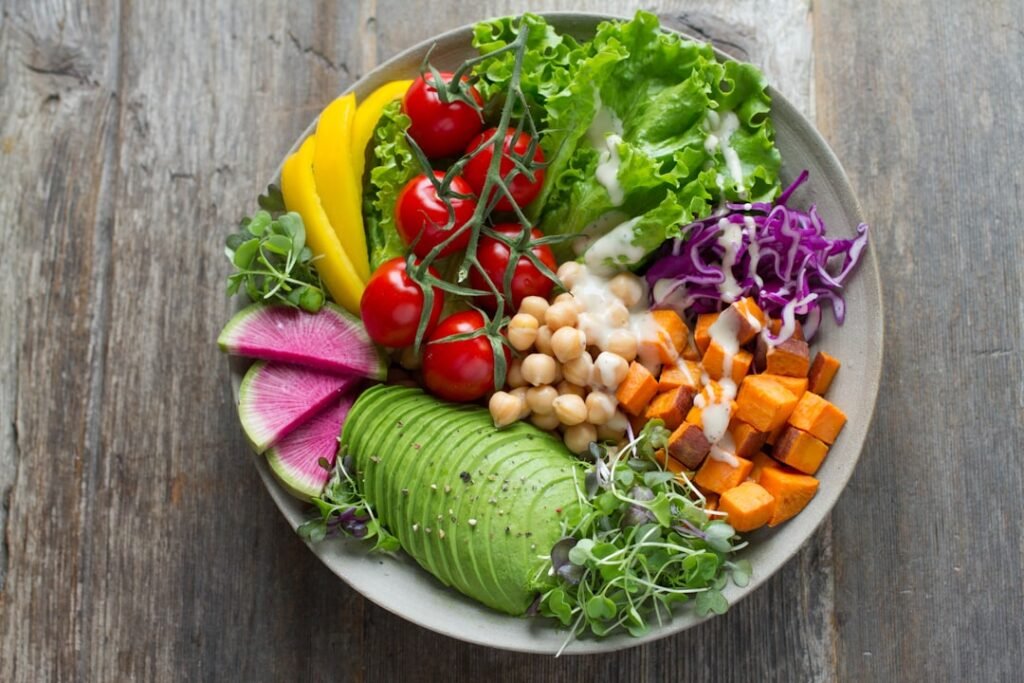
| Fiber-rich vegetables (required) | Broccoli, spinach, peppers, zucchini, tomatoes, cucumber, asparagus | At least half the plate |
| Complex carb (optional but helpful) | Brown rice, quinoa, sweet potato, whole grain bread, lentils | Fist-sized portion |
| Healthy fat (small amount) | Olive oil, avocado, nuts, tahini | Thumb-sized or 1-2 tablespoons |
| Flavor layer (keep it interesting) | Lemon, hot sauce, spices, herbs, vinegar, soy sauce | To taste |
Using this framework, you can build a filling, weight-loss-appropriate meal from almost anything in the fridge without opening a recipe app. The key is making sure the protein and vegetables are non-negotiable. The carb and fat components can flex based on what’s available.
Swaps That Cut Calories Without Cutting Satisfaction
| Instead of | Try this | Approximate calorie saving |
|---|---|---|
| White rice (1 cup) | Cauliflower rice or half portion white rice + extra veg | 100-150 cal |
| Pasta carbonara | Zucchini noodles or regular pasta with less sauce + more protein | 200-300 cal |
| Creamy salad dressing (2 tbsp) | Olive oil and vinegar or tahini dressing (portion-controlled) | 50-100 cal |
| Granola cereal (1 cup) | Greek yogurt with a small sprinkle of granola (2 tbsp) | 200-300 cal |
| Chips as a snack | Cucumber slices with hummus or cottage cheese | 150-250 cal |
| Sweetened coffee drink | Black coffee or cold brew with a splash of milk | 200-400 cal |
Worth It vs. Skip It for Weight Loss Meals
Worth It
- Soup-based meals – the liquid volume signals fullness effectively and they tend to be low calorie
- Legumes in any form (lentils, chickpeas, black beans) – excellent protein, fiber, and they’re cheap. Healthline’s protein satiety research confirms high-protein meals reduce calorie intake at subsequent meals
- Frozen vegetables – nutritionally comparable to fresh, zero prep, last indefinitely
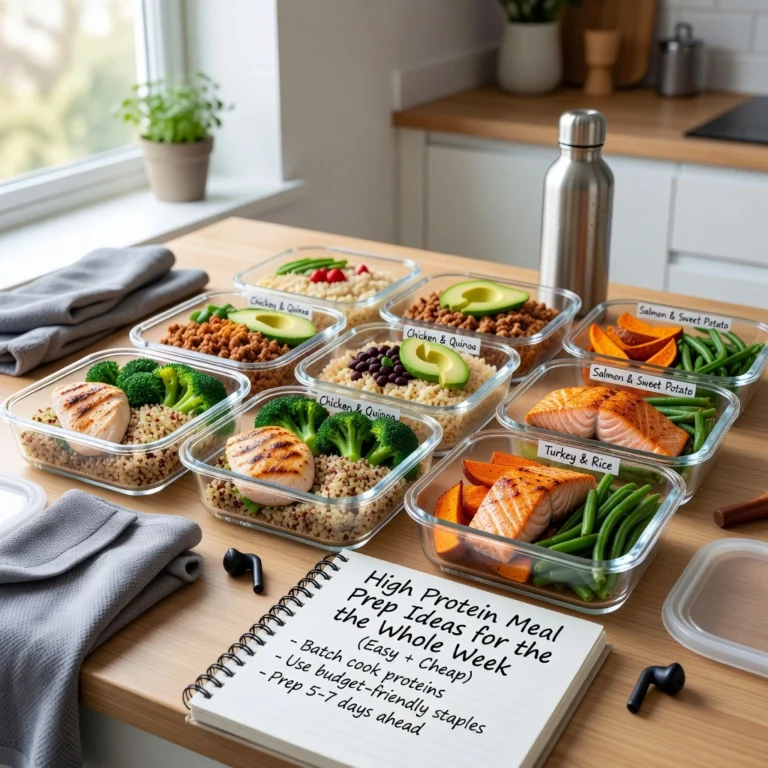
- Batch-cooked proteins – cook chicken or hard-boil eggs in bulk so the protein is always ready
- Big salads with substantial protein and fat – filling if built correctly, a disappointment if not
Skip It (for weight loss specifically)
- “Healthy” granola bars and protein bars as meal replacements – most have the calorie density of candy bars with slightly better marketing
- Smoothies as meal replacements (unless they include substantial protein and fat) – liquid calories don’t suppress hunger the way solid food does
- Low-fat versions of foods that use sugar to compensate (low-fat yogurt, reduced-fat peanut butter) – often worse than the full-fat version for satiety
Meal Ideas by Goal
If you’re pairing these meals with training, timing and content matter slightly differently. For pre-workout meals, prioritize carbs for energy. For post-workout, prioritize protein for recovery. Our what to eat before and after a workout guide covers this in detail.
For a full week of meal ideas organized by day, our high-protein meal prep guide gives you specific options with prep strategies. And if lunch at work is the challenge, our healthy lunch ideas for work focuses specifically on portable, no-reheat-needed options.
Frequently Asked Questions
How many calories should a healthy weight loss meal have?
A reasonable target for most people is 400-600 calories per main meal, leaving room for snacks and allowing a modest overall daily deficit. More important than hitting a specific number is the composition: adequate protein and fiber to stay full until the next meal. A 500-calorie meal that’s mostly refined carbs will leave you hungry in 90 minutes. A 500-calorie meal with 30g protein and plenty of vegetables won’t.
What’s the most filling food for weight loss?
Protein-rich foods consistently rank highest for satiety per calorie. Among the best: eggs, Greek yogurt, cottage cheese, white fish, chicken breast, and legumes. These are filling, relatively low in calories, and widely available. Combining any of these with high-fiber vegetables maximizes the satiety effect.
Can I eat enough to feel full and still lose weight?
Yes. This is the core principle of volume eating: filling most of your plate with low-calorie, high-volume foods (vegetables, broth-based soups, salads with protein) means you eat a large physical quantity of food without a large calorie count. You can eat a very large bowl of vegetable soup with chicken and feel genuinely full for far fewer calories than a small portion of calorie-dense food.
Are meal prep containers worth buying for weight loss?
If you’re going to prepare meals in advance, yes. Pre-portioning food into containers removes the temptation to go back for more when you’re not actually hungry. It also makes the decision in advance (when you’re not hungry and making better choices) rather than in the moment (when you are hungry and unlikely to be precise).
Is it okay to eat the same meals every week for weight loss?
For most people, eating the same 5-7 meals on rotation is actually a feature, not a bug. Decision fatigue around food choices is a real driver of poor choices. Knowing exactly what you’re eating removes that decision. The people who struggle with food consistency tend to have too many options, not too few.
Pick one meal from the “under 10 minutes” section. Make it this week. See how you feel three hours after eating it versus your usual option. That feedback is more useful than any food rule.
Pin this for your next grocery run, or share it with someone who says they don’t know what to eat when trying to lose weight.