A good travel workout guide should help you stay fit on the road without a gym, a free hour or any special gear. Travel disrupts routines: meals shift, sleep gets shorter and the gym you planned to use turns out to be a cramped room with one treadmill. The good news is that short, simple sessions can keep your fitness ticking over, and you do not need perfect conditions to do them.
This guide covers how to plan your trip, a bodyweight hotel room workout, ways to move in airports and on long journeys, and how to eat and sleep well while away. It is written for beginners, so everything can be scaled up or down.
Set Realistic Goals for Trips
Before you pack, decide what success looks like. On a busy work trip, success might be three 15-minute sessions and plenty of walking. On a holiday, it might be moving every morning before sightseeing. Maintaining your fitness for a week or two is a perfectly good goal, and short breaks from your usual routine rarely undo months of consistent training.
Pick a minimum you can always do, such as ten minutes of bodyweight exercises. A small habit that survives travel is more useful than an ambitious plan that falls apart on day two. Our guide on how to build a workout habit that sticks explains how to keep that minimum realistic.
What to Pack (Almost Nothing)
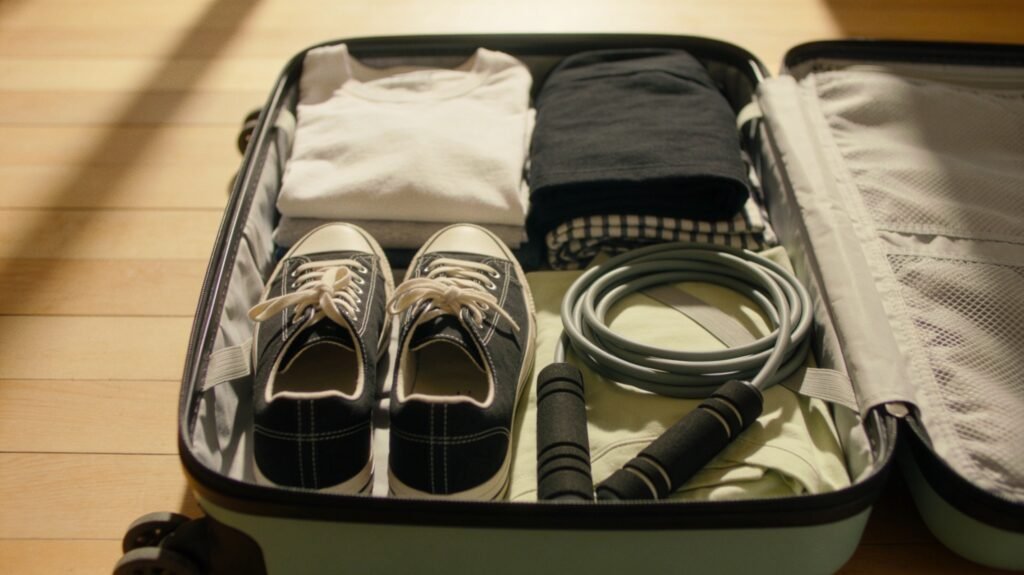
You can train with no equipment at all, but a few light items make workouts more varied and take almost no space in a bag.
- Resistance bands: a set of two or three loop or tube bands weighs very little and adds rows, presses and glute work.
- A skipping rope: good for quick cardio in a car park or hotel corridor, where permitted.
- Comfortable trainers: even if you only plan to walk, supportive shoes make walking more appealing.
- A towel or mat substitute: a hotel towel folded on the floor works for floor exercises.
If you travel with only carry-on luggage, leave the bands and rope in a side pocket so they are easy to reach.
A 20-Minute Hotel Room Workout
This routine needs about two square metres of floor space and can be done in socks or trainers. Warm up first with two minutes of marching in place, arm circles and gentle hip circles. Then complete the circuit below two or three times, resting 45 to 60 seconds between rounds.
- Bodyweight squats: 12 to 15 reps.
- Incline or standard push-ups: 8 to 12 reps, using the bed or desk if floor push-ups are too hard.
- Reverse lunges: 8 to 10 per leg.
- Glute bridges: 12 to 15 reps, pausing for a second at the top.
- Plank: 20 to 40 seconds.
- Bird dogs: 8 per side, moving slowly.
If you are new to exercise, start with one round and build up over several sessions. For a longer routine that needs no kit, try our 20-minute home workout for beginners or the full body calisthenics workout, both of which adapt well to a hotel room.
Add Resistance Bands for Strength
Bands let you pull as well as push, which bodyweight moves often miss. Loop a band around a sturdy door handle or the leg of a heavy piece of furniture, check that it is secure, and try these moves.
- Banded rows: 10 to 15 reps, squeezing your shoulder blades together.
- Overhead press: 8 to 12 reps standing on the middle of the band.
- Banded good mornings: 10 to 12 reps to work the hamstrings and glutes.
- Bicep curls and triceps pushdowns: 10 to 15 reps each.
Inspect bands for nicks before use, and avoid anchoring them to anything that could slip or break. Slow, controlled repetitions will feel harder than they look.
Stay Active in Airports and on Long Journeys
Long journeys are hard on the body because you sit for hours. You cannot do a full workout in a plane seat, but you can break up the stillness. Walk the terminal rather than sitting at the gate, take stairs instead of escalators, and stand while you wait if you have a long layover.
On flights, stand and walk the aisle when the seatbelt sign is off. In your seat, rotate your ankles, flex and point your feet, and gently stretch your neck and shoulders. On road trips, plan a stop every hour or two for a five-minute walk. The NHS recommends that adults aim for regular physical activity across the week, and travel days are a useful chance to add some. See the NHS physical activity guidelines for general targets.
Use Walking as Your Main Exercise
Walking is the most accessible activity on any trip. Exploring a city on foot often adds up to far more movement than a home routine, and you get to see more. If you track steps, many people find that sightseeing days naturally land between 8,000 and 15,000 steps, though this varies a lot between people. Our guide on how many steps per day for weight loss explains how to think about daily targets.
- Walk to meetings or restaurants rather than taking a taxi when it is safe to do so.
- Take a 20 to 30 minute morning walk before breakfast.
- Choose accommodation near parks or walkable routes where possible.
- Add a few bodyweight squats at a viewpoint or bench.
Eat Well Without Obsessing
Travel food is often convenient rather than healthy, but you can make better choices without banning anything. Aim for protein at most meals, add a vegetable or piece of fruit where you can, and drink water through the day. Our list of high protein foods is useful for choosing airport and supermarket snacks, such as yogurt, nuts, jerky or boiled eggs.
If you eat out a lot, look at our guide to healthy fast food orders for quick ideas. Keep your approach flexible. Enjoying local food is part of the trip, and a single heavy meal will not undo your progress. If you have a medical condition, allergies or specific dietary needs, check with a healthcare professional or dietitian before changing how you eat while travelling.
Protect Your Sleep
Sleep often suffers on the road because of time zones, noisy rooms and late dinners. Poor sleep can make workouts feel harder and increase hunger, so protecting it helps everything else. Try to get daylight in the morning, avoid heavy meals and caffeine late in the day, and keep your room as dark and quiet as you can. An eye mask and earplugs weigh almost nothing.
Light morning exercise can also help you adjust to a new time zone. If you are very tired, a gentle walk or stretching session is better than skipping movement entirely, and better than forcing a hard session. Read our tips on sleep habits that support fitness for more ideas.
A Simple Three-Day Travel Plan
Use this as a template and adjust it to your schedule. Aim for short sessions and treat rest as part of the plan.
- Day 1 (travel day): walk as much as you can, stretch for five minutes at your destination.
- Day 2: the 20-minute hotel room circuit plus a 20-minute walk.
- Day 3: band workout of rows, presses and good mornings, followed by an easy walk.
Repeat as needed, and take a full rest day if you feel run down. If you want an overview of how to structure rest, read why rest days matter.
Common Travel Workout Mistakes
The most common mistake is all-or-nothing thinking: if you cannot do a full workout, you do nothing. Ten minutes still counts. Another is trying to do too much because you feel guilty about missing sessions. Jumping into a hard workout after a long flight, while tired and dehydrated, raises the chance of strains or soreness.
A third mistake is ignoring your surroundings. Check floors for slipperiness, avoid jumping exercises if you share a floor with neighbours below, and be cautious exercising outdoors in unfamiliar areas, especially after dark. If something hurts, stop. If pain persists, speak to a doctor or physiotherapist.
Frequently Asked Questions
Can you stay fit while travelling without a gym?
Yes. Bodyweight exercises, resistance bands and plenty of walking can maintain much of your fitness for short trips. Aim for short, consistent sessions of 10 to 20 minutes and regular walking. Exact results vary, but most people can keep their routine going with very little equipment.
How often should I work out on holiday?
There is no single right answer. Two to four short sessions per week, plus daily walking, is a realistic target for many beginners. Treat holiday workouts as flexible, not compulsory. If you miss a day, simply carry on with the next planned session instead of trying to make up for it.
What is the best equipment for a travel workout?
Resistance bands are widely considered the most practical option because they are light, cheap and work most major muscle groups. A skipping rope is a good second choice for cardio. Neither is essential, since bodyweight squats, lunges, push-ups and planks can be done anywhere with a bit of floor space.
Should I exercise if I feel jet lagged?
Gentle activity such as walking or stretching is usually fine and may help you adjust, particularly outdoors in daylight. Avoid intense training if you feel dizzy, unwell or exhausted. If you have a health condition, or symptoms that concern you, check with a healthcare professional before exercising after long-haul travel.
Final Thoughts
Staying fit on the road is mostly about having a plan that fits real life. Pack a band, keep a ten-minute bodyweight routine ready, walk wherever you can, and be kind to yourself when plans change. Consistency over weeks matters far more than perfection on any single trip. This article is general information and not medical advice.