This arm workout guide shows you how to build bigger biceps and triceps with a simple plan you can follow at home or in the gym. You do not need fancy machines or a dozen exercises. You need a handful of well-chosen movements, steady progression, and enough recovery. Below you will find the muscles involved, the best exercises, a beginner routine, and the mistakes that slow most people down.
Results vary from person to person, depending on genetics, training history, diet, and sleep. If you have an injury, joint pain, or a medical condition, check with a healthcare professional before starting a new programme.
How your arm muscles work
The upper arm has two main muscle groups. The biceps brachii sits on the front and bends the elbow, and it also helps rotate the forearm. The triceps brachii sits on the back and straightens the elbow. There is also the brachialis, a smaller muscle under the biceps that adds to arm thickness, and the forearm muscles that help with grip.
Here is the part many beginners miss: the triceps make up roughly two thirds of your upper arm. If you want bigger-looking arms, the triceps deserve at least as much attention as the biceps. Our dedicated guide to triceps exercises for size and definition goes deeper on that muscle.
Your arms also work hard in almost every pulling and pushing exercise. Rows and pull-ups train the biceps, while presses and dips train the triceps. That is why big compound lifts matter even in an arm-focused plan. The Mayo Clinic describes strength training as a core part of fitness for adults, and arm training is a natural part of that.
Arm workout guide: the best exercises for biceps and triceps
You can build solid arms with two or three exercises per muscle. Choose movements you can perform with good form and load gradually. All of the options below work with dumbbells, a barbell, resistance bands, or a cable machine. If you only own dumbbells, our dumbbells-only full-body plan shows how to fit them into a whole week.
Biceps exercises
- Dumbbell curl. The classic. Stand tall, keep elbows by your sides, curl up, and lower slowly over about three seconds.
- Hammer curl. Hold the dumbbells with palms facing each other. This targets the brachialis and forearms and often feels easier on the wrists.
- Incline dumbbell curl. Lying back on an incline bench stretches the biceps at the bottom of each rep, which many lifters find effective for growth.
- Chin-up or band-assisted chin-up. A compound move that trains the back and biceps together. Use a resistance band for help if you cannot do a full rep yet.
Triceps exercises
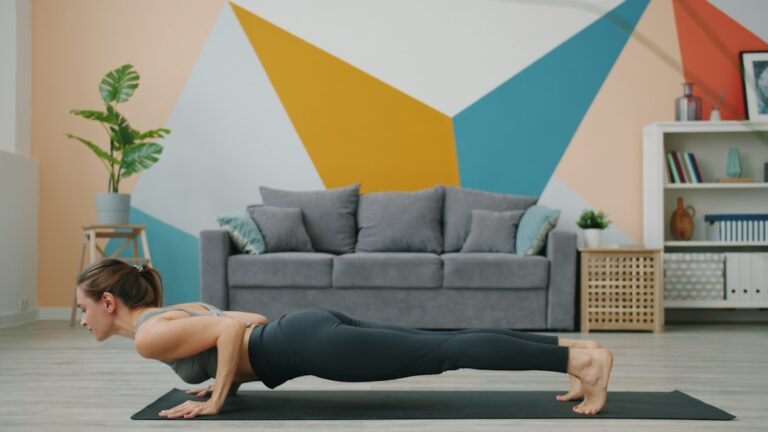
- Close-grip push-up. Place your hands slightly narrower than shoulder width. A beginner-friendly option that needs no equipment.
- Overhead dumbbell extension. Holding one dumbbell overhead with both hands stretches the long head of the triceps, the largest part of the muscle.
- Bench or chair dip. Keep your hips close to the bench and stop if your shoulders feel pinched. Bend your knees to make it easier.
- Cable or band pushdown. A smooth, joint-friendly way to add volume once the basics feel comfortable.
Pick one or two from each list and learn them well before adding more. Variety matters less than consistent effort and better reps over time.
A beginner arm workout routine
Train arms twice a week with at least 48 hours between sessions. You can do these after a larger workout or as short standalone sessions. Warm up with five minutes of light movement, then a set of each exercise at a very light weight.
Session A
- Dumbbell curl: 3 sets of 8 to 12 reps
- Overhead dumbbell extension: 3 sets of 8 to 12 reps
- Hammer curl: 2 sets of 10 to 15 reps
- Close-grip push-up: 2 sets to near the limit of good form
Session B
- Incline dumbbell curl or band-assisted chin-up: 3 sets of 6 to 10 reps
- Bench dip or band pushdown: 3 sets of 8 to 12 reps
- Hammer curl: 2 sets of 10 to 15 reps
- Overhead extension: 2 sets of 10 to 15 reps
Rest about 60 to 90 seconds between sets. Choose a weight that makes the last two reps challenging but still clean. If you finish a set and feel you could have done five more reps, go heavier next time.
If you are new to lifting and want a full programme beyond arms, see our beginner strength training programme for women at home. The principles apply to anyone starting out.
Warm-up and form tips
A few minutes of preparation protects your elbows and shoulders, which take most of the strain in arm training. Start with arm circles, band pull-aparts, and ten easy bodyweight push-ups. Then do one light warm-up set of your first exercise before adding load.
- Keep your wrists straight and your elbows close to your torso during curls.
- Control the lowering phase instead of dropping the weight.
- Breathe out as you lift and in as you lower, without holding your breath.
- Stop a set when your form breaks down, even if you planned more reps.
- Choose pain-free ranges. A stretch or burn in the muscle is fine, but sharp joint pain is a signal to stop.
How to progress and keep growing
Muscles grow when you give them a reason to adapt. That means gradually asking more of them over time, a principle called progressive overload. You can do that in several ways, and you only need to improve one of them at a time.
- Add reps. If you did 8 reps last week, try for 9 or 10 this week with the same weight.
- Add weight. Once you reach the top of your rep range on all sets, increase the weight by the smallest jump available.
- Add a set. Going from 2 to 3 sets raises total training volume.
- Slow the lowering phase. Taking three seconds to lower the weight makes the same load harder.
- Improve range of motion. A full stretch and full squeeze count as real progress.
Keep a simple log of weight, sets, and reps. Beginners often see steady gains over the first several months, but the pace slows with experience, and that is normal. Many people notice visible changes after something like eight to twelve weeks of consistent training and good habits, though this varies widely.
Common arm training mistakes
- Swinging the weight. Momentum takes work away from the muscle. Lower the weight and keep your torso still.
- Ignoring triceps. Training only biceps leaves most of your arm size on the table.
- Skipping big lifts. Rows, presses, and pull-ups give your arms plenty of work. Arm isolation is the finishing touch, not the foundation.
- Training arms daily. Muscles need time to repair. Two to three arm sessions per week is plenty for most people.
- Never changing anything. If your numbers have not moved in four to six weeks, adjust volume, load, or recovery.
Recovery and nutrition for arm growth
Growth happens between sessions, not during them. Sleep is the biggest lever. Most adults do best with seven to nine hours. Our article on why rest days are essential for muscle building and fat loss explains how to schedule recovery sensibly.
Food matters too. Common guidance for people lifting regularly is about 1.4 to 2.0 grams of protein per kilogram of body weight per day, spread across meals. If you are not sure where to start, our list of high protein foods makes planning easier. Eating enough overall energy also helps. If you are trying to lose fat at the same time, lifting can help preserve muscle, as we explain in strength training for weight loss.
Mild muscle soreness after a new workout is normal. Sharp pain, joint pain, numbness, or swelling is not. Stop and speak with a healthcare professional if you notice those signs.
Frequently asked questions
How often should I train arms to make them bigger?
Two sessions per week works well for most beginners and intermediates, with at least 48 hours between them. Some people do well with three shorter sessions. Let recovery, not ego, set the limit, and add volume slowly.
Can I build bigger arms at home without a gym?
Yes. Resistance bands, a pair of adjustable dumbbells, and bodyweight moves like close-grip push-ups and chair dips are enough to train both muscles effectively. The key is to keep making the work gradually harder over time.
How many reps and sets are best for biceps and triceps?
Most people do well with 8 to 15 reps per set and roughly 6 to 12 total hard sets per muscle each week. Start at the lower end of that range, then add sets as your recovery allows and your technique stays solid.
Why are my arms not growing?
Common causes include not eating enough, sleeping poorly, repeating the same weights, and over-relying on isolation moves. Check your log first. If nothing has progressed in a month, adjust one variable at a time and give it several weeks.
Pick two exercises per muscle, train twice a week, add a little more each session, and let time do the rest. Consistency beats complexity every time.
\n\n\n