Weight loss and fatty liver disease: how diet and exercise help reverse it
When I first heard someone mention fatty liver disease, I thought it was something that only happened to people who drank heavily. I was wrong. A few years back, a friend got routine bloodwork done and learned he had nonalcoholic fatty liver disease, or NAFLD. He wasn’t overweight by much. He didn’t drink. But his liver had fat in it, his enzymes were elevated, and his doctor told him he needed to make changes or risk serious complications down the line.
The frustrating part? His doctor said, “Lose weight and exercise,” but didn’t give him much else. No meal plan. No specific workout routine. Just vague advice that left him scrolling the internet at midnight, confused about whether he needed to go keto, run every day, or buy some supplement.
Weight loss and fatty liver disease are directly connected, and the good news is that the same diet and exercise changes that help you lose weight also help reverse fatty liver disease. You don’t need extreme measures. You need a plan that actually works.
This post contains affiliate links. If you buy through them, I earn a small commission at no extra cost to you.
TL;DR
- A calorie deficit of 500-750 calories per day can reverse fatty liver in as little as 8-12 weeks, even without dramatic weight loss
- Cutting refined carbs and added sugars has a direct positive effect on liver fat, independent of total calories
- Walking 7,000-10,000 steps daily requires zero equipment and works as well as gym cardio for improving liver markers
- Strength training twice a week (even 20 minutes of bodyweight work) reduces liver inflammation and improves insulin sensitivity
- Medical supervision matters: work with your doctor to monitor liver enzymes (ALT, AST) and adjust your plan as you progress
Can weight loss reverse fatty liver disease?
Yes. This is the most important fact to understand first. Fatty liver disease is not permanent, and it is not a slow problem to fix.
Research shows that losing just 5-10% of your body weight can reduce liver fat content by 20-30%. More importantly, studies published in journals like Hepatology have found that people with NAFLD who lose 10% of their body weight see significant improvements in liver inflammation and fibrosis scores, even if they don’t reach an “ideal” BMI.
The mechanism is straightforward: when you lose weight through a calorie deficit, your liver uses stored fat for energy. Fat leaves the liver cells, and liver enzymes (ALT and AST) improve. Insulin sensitivity improves, which reduces the metabolic stress on the liver. This isn’t theory. This is measured on blood work and ultrasound.
One key caveat: the timeline matters. Don’t expect results in two weeks. Most people see meaningful improvement in liver enzymes after 8-12 weeks of consistent effort. Your doctor can monitor this with blood work, so you’ll have proof that what you’re doing is working.
Fatty liver disease and weight loss: how much do you need to lose?
The amount of weight loss required to reverse fatty liver disease is smaller than you might think, and this is genuinely good news if you’re starting from a place where “lose 50 pounds” sounds impossible.
Studies consistently show that a 5-10% reduction in body weight produces measurable improvements in liver fat content and liver enzymes. For a person who weighs 200 lbs (91 kg), that’s 10-20 lbs (4.5-9 kg). For someone at 250 lbs (113 kg), it’s 12-25 lbs (5.5-11 kg).
This matters because it reframes the goal. You’re not trying to get to your high school weight. You’re trying to shift the metabolic conditions that are causing fat to accumulate in your liver. A smaller shift creates change.
That said, more weight loss is better. People who lose 10-15% of body weight see even greater improvements, and those who lose 15%+ may achieve complete reversal of fatty liver disease, including improvement in fibrosis (scarring) if it’s present.
The practical implication: aim for a loss of 1-2 lbs (0.5-1 kg) per week through a calorie deficit of 500-750 calories per day. This is sustainable, it doesn’t require extreme restriction, and it produces the liver improvements you’re after within 8-12 weeks.
Best diet for fatty liver weight loss: focus on what to remove, not add
Most diet advice for weight loss focuses on what to eat. For fatty liver disease, it’s worth starting with what to remove.
The two biggest culprits in NAFLD are refined carbohydrates and added sugars. These drive up liver fat independently of total calories because they trigger large insulin spikes, which signal your liver to store more fat. Fructose (the sugar in soda, juice, and many processed foods) is particularly problematic for the liver.
Start here: cut out sugary drinks entirely. Soda, energy drinks, fruit juice, sweetened coffee drinks. These provide calories and insulin spikes with zero satiety. This alone, without changing anything else, can improve liver markers in some people.
Next: reduce refined carbs. White bread, white rice, pasta, pastries, breakfast cereals. These digest quickly, spike blood sugar, and signal your liver to store fat. You don’t have to go zero-carb. You just need to prioritize whole grains, legumes, and vegetables.
After that, the calorie deficit kicks in. You need to eat fewer calories than you burn to lose weight. This is non-negotiable. A calorie deficit of 500-750 calories per day produces the 1-2 lbs per week loss that reverses fatty liver disease.
How do you create a deficit without feeling deprived? Focus on protein and fiber. These two macronutrients keep you full longer than carbs or fat alone. Aim for 1.6-2.2g of protein per kilogram of body weight (0.7-1g per pound). This means:
- Eggs, Greek yogurt, cottage cheese, or protein powder for breakfast
- Chicken, fish, turkey, or lean beef with lunch and dinner
- A small protein snack between meals if hungry
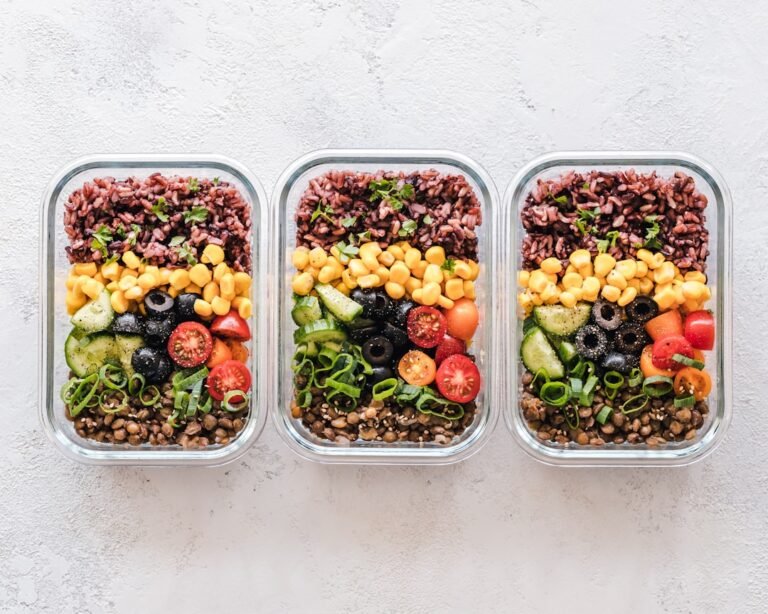
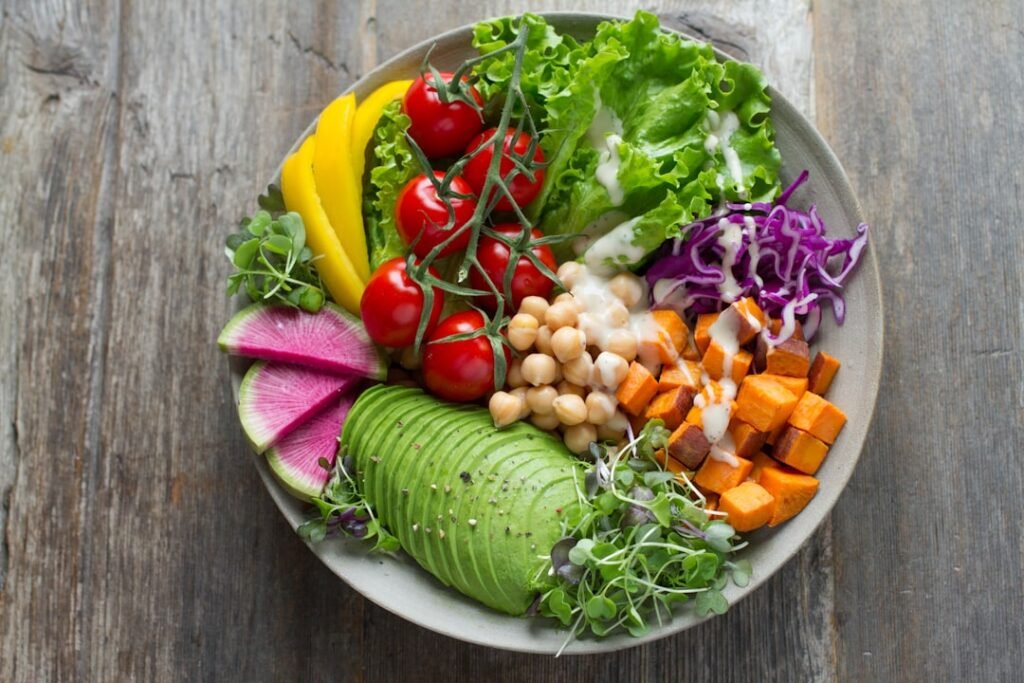
Include vegetables with every meal. They’re high in fiber, low in calories, and improve satiety. Add a fist-sized portion of whole grains (brown rice, oats, quinoa) or starchy vegetables (sweet potatoes, beans) at lunch and dinner.
Don’t obsess over every calorie, but do track your food for two weeks using an app like MyFitnessPal or Cronometer. This is eye-opening for most people. You’ll see where the extra calories are hiding (oils, sauces, snacks) and how portion sizes compare to what you thought you were eating.
Who this works for: Anyone with NAFLD who can commit to tracking food for at least two weeks and removing sugary drinks and obvious refined carbs. This is the lowest barrier to entry.
Common mistake: Removing sugar but replacing it with “healthy” carbs in larger portions. A bowl of granola is healthier than a bowl of candy, but if you eat double the portion size, the calorie deficit disappears. Measure and track.
Exercise for fatty liver disease: start with walking
If you have fatty liver disease and exercise hasn’t been part of your routine, walking is the single best entry point.
Walking requires no equipment, no gym membership, no special clothes, and no prior fitness level. It’s also remarkably effective. Studies show that people with NAFLD who walk 7,000-10,000 steps per day for 8 weeks see improvements in liver fat content comparable to people doing high-intensity gym training.
The reason is partly metabolic: walking burns calories and creates a deficit. But there’s more to it. Walking improves insulin sensitivity directly, independent of weight loss. This matters because insulin resistance is a root cause of NAFLD. When your cells respond better to insulin, your liver stops storing fat.
Aim for 7,000-10,000 steps per day. If that sounds high, break it down: a 30-minute walk is roughly 3,000-3,500 steps. Walk for 30 minutes in the morning and another 20 minutes in the evening, and you’re there. Add incidental movement during the day (take the stairs, park farther away, stand during phone calls) and you’re above 10,000 steps with minimal effort.
Start with 5,000 steps per day for the first week if you’re currently sedentary. Add 1,000 steps per week until you reach 10,000. This prevents the soreness and discouragement that come with ramping up too fast.
Who this works for: Anyone, regardless of current fitness level or body composition. Walking is the most beginner-friendly intervention for fatty liver disease.
Common mistake: Setting a goal of 10,000 steps on day one and quitting by day three when it feels overwhelming. Start at 5,000 steps and progress gradually.
Strength training twice a week for liver health
Walking is essential, but adding strength training amplifies the results.
Strength training improves insulin sensitivity more effectively than cardio alone. It also preserves muscle mass during weight loss, which helps maintain your metabolic rate. For fatty liver disease specifically, resistance exercise reduces liver inflammation and improves liver enzyme markers.
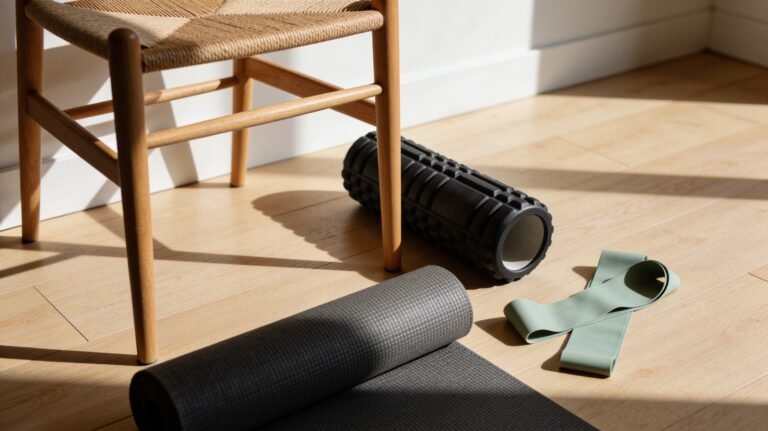
You don’t need a gym. Bodyweight work is sufficient. Two sessions per week, 20-30 minutes each, is enough to see improvements. Here’s a simple beginner routine:
| Exercise | Sets | Reps | Rest | Beginner mod | |———-|——|——|——|————–| | Bodyweight squats | 3 | 12 | 60 sec | Hold a chair back for balance | | Push-ups | 3 | 8-12 | 60 sec | Knees on ground, or hands on wall | | Glute bridges | 3 | 15 | 45 sec | No modification needed | | Bent-over rows (resistance band) | 3 | 12 | 60 sec | Loop band around a sturdy object or use light band | | Plank | 3 | 20-30 sec | 45 sec | Knees on ground |
Do this twice per week on non-consecutive days (Monday and Thursday, or Tuesday and Friday). Rest completely on other days. This is the minimum effective dose, and it works.
If you have a resistance band at home (they cost under $15), you can add more exercises: band pull-aparts, band leg presses, band chest presses. But bodyweight alone is sufficient to improve liver markers.
Who this works for: Anyone who can dedicate 20-30 minutes twice per week. The barrier here is consistency, not intensity.
Common mistake: Doing too much too soon. Many people do strength training three times per week in week one, get sore, and stop. Two sessions per week, done consistently for 8 weeks, beats five sessions per week done for two weeks.
Bodyweight training vs resistance bands: which works better for fatty liver?
If you’re deciding between bodyweight work and using resistance bands, the honest answer is that both work. The difference is marginal.
Bodyweight exercises (squats, push-ups, glute bridges) are sufficient to improve insulin sensitivity and reduce liver fat. They’re free and require no equipment. The downside is that as you get stronger, the exercises become easier, and you need to increase reps or add difficulty modifications (single-leg squats, archer push-ups, etc.) to keep improving.
Resistance bands allow you to add weight more easily and adjust resistance in smaller increments. A $15 set of bands provides enough resistance for months of training. They’re also easier on joints for some people.
For fatty liver disease specifically, the metabolic benefit comes from creating muscle tension and burning calories. Bodyweight and bands do this equally well. Start with bodyweight because it’s free. If you plateau or get bored after 6-8 weeks, add a cheap band set.
Equipment recommendations for home training with fatty liver disease
If you want to add any equipment, here’s what actually makes sense at each price point.
Budget (under $20)
- Resistance bands set: $10-15. Gives you options for upper and lower body work. Durable for years.
- Jump rope: $8-12. Good for adding cardiovascular work at home without joint impact of running.
- Door anchor strap: $5-10. Lets you use resistance bands for rows and chest work without needing a pull-up bar.
Mid-range ($20-$60)
- Adjustable dumbbell set (5-15 lbs or 2-7 kg): $40-60. More versatile than bands. Better progression as you get stronger. Check Amazon for deals on used adjustable dumbbells.
- Pull-up bar: $20-35. Bodyweight pull-ups and assisted pull-ups are excellent for back strength and burn significant calories.
- Yoga mat: $15-25. Not essential, but padding for floor work is nice if you have joint sensitivity.
Best overall If I could pick one thing: a set of adjustable dumbbells (5-15 lbs). They’re more expensive than bands but they last forever, they provide clear progression, and they’re less awkward than bands for compound movements like squats and lunges with added weight. A pair of 15-lb (7 kg) dumbbells costs $30-40 used on Facebook Marketplace.
For fatty liver disease specifically, you don’t need anything fancy. Bodyweight and a pair of cheap resistance bands are genuinely sufficient to reverse the disease.
How quickly do liver enzymes improve with diet and exercise?
This is the question that matters most to people with diagnosed NAFLD: how long until I see improvement on blood work?
Most people see measurable improvements in liver enzymes (ALT and AST) after 6-8 weeks of consistent diet and exercise changes. “Measurable” means a drop of 10-20% from baseline, which is clinically meaningful.
Significant improvements (30-50% reduction in enzymes) typically appear after 12 weeks of consistent effort. This is the standard timeline you see across research studies on NAFLD and weight loss.
Ultrasound evidence of reduced liver fat can take 12-16 weeks to show clearly, so don’t request repeat imaging until you’ve been consistent for at least three months.
The practical timeline: commit to 8-12 weeks. Get bloodwork done at week 8. If your enzymes have dropped, you know the plan is working and you should continue. If they haven’t improved yet, you may need to tighten the calorie deficit or increase exercise volume, but changes are usually visible by week 8.
Medical supervision and monitoring progress
This is important enough to say plainly: work with your doctor on this. Fatty liver disease ranges from simple steatosis (fat in the liver with no inflammation) to NASH (nonalcoholic steatohepatitis, with inflammation and potential fibrosis). Your doctor can tell you which category you’re in and what your target should be.
Ask your doctor to:
- Get baseline bloodwork including ALT, AST, GGT, and alkaline phosphatase
- Calculate your FIB-4 score or order a fibrosis test if fibrosis is suspected
- Schedule follow-up blood work at 8 weeks and 12 weeks
- Discuss any medications that might be contributing (some diabetes drugs, for example, worsen NAFLD)
You should also ask if any specific restrictions apply to you. Most people with NAFLD can follow the advice in this article. But if you have cirrhosis or advanced fibrosis, you may need modifications.
What not to do: common mistakes that delay progress
Don’t go on an extreme diet. A calorie deficit of 1,500 calories per day might produce faster weight loss, but it’s unsustainable and it can cause muscle loss and metabolic damage. Stick to 500-750 calories per day, which is sustainable for 12 weeks.
Don’t try to outrun your diet. Exercising for an hour per day won’t overcome a poor diet. Diet is roughly 70-80% of the weight loss equation. Walking and strength training create the deficit, yes, but cutting sugar and refined carbs is essential.
Don’t focus solely on weight loss numbers. The scale fluctuates based on water retention, digestion, and hormones. Your liver enzymes and how you feel are better markers than the scale. If your weight hasn’t moved in two weeks but your energy is up and your digestion is better, the metabolic changes are happening.
Don’t expect perfection. One meal won’t derail you. One missed workout won’t derail you. Consistency over time is what matters. If you eat well 80% of the time and exercise twice per week for 12 weeks, you will see improvement.
Frequently Asked Questions
How much weight do I need to lose to reverse fatty liver disease?
A loss of 5-10% of your body weight produces measurable improvements in liver fat and liver enzymes. For a 200-pound person, that’s 10-20 pounds. More weight loss (15%+) produces more dramatic reversal, but even a modest loss improves your liver markers significantly within 8-12 weeks.
Can I reverse fatty liver disease with exercise alone, without changing my diet?
Exercise alone is unlikely to reverse NAFLD without calorie deficit. Studies show that people who exercise without creating a calorie deficit see minimal improvement in liver fat. Diet is essential. That said, diet plus exercise is far more effective than diet alone.
Is fatty liver disease reversible at all, or is it permanent?
Fatty liver disease is reversible, even in advanced stages. Studies show that people who lose 10% of body weight and maintain it see complete reversal of NAFLD, including improvement in fibrosis and inflammation. It’s not permanent.
What’s the best diet for reversing fatty liver disease: low-carb, keto, or low-fat?
The best diet is the one you’ll stick to that creates a calorie deficit. Research shows no significant advantage of keto or low-carb over balanced low-calorie diets for NAFLD reversal. What matters is removing sugar and refined carbs, eating adequate protein, and maintaining a deficit. A sustainable diet beats a perfect diet that you can’t maintain.