
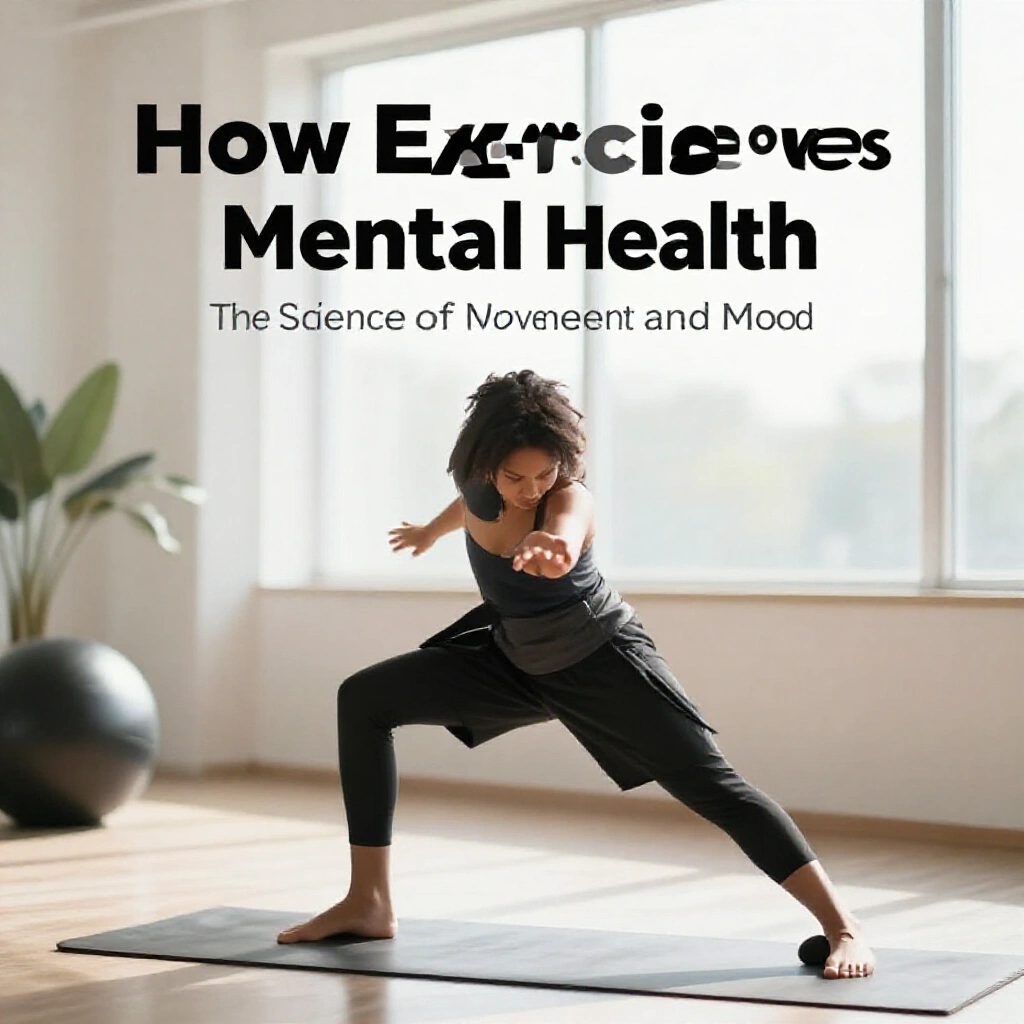
How Exercise Improves Mental Health: The Science of Movement and Mood
By Jake Reynolds | Certified Personal Trainer | Last updated: May 2, 2026 | 11 min read
Save this article to your Wellness board on Pinterest. Your mental health and your fitness are the same thing.
You have probably noticed that you feel better after a workout. Not just physically — your mood improves, anxiety softens, and things that felt overwhelming before you exercised seem more manageable afterwards. That is not a coincidence or a placebo effect.
The science of how exercise improves mental health is now as robust as almost any area of psychological research. Multiple large-scale reviews confirm that regular physical activity reduces symptoms of depression, anxiety, and stress — in many cases as effectively as first-line treatments like therapy and medication.
This article breaks down the mechanisms, the research, and the practical implications for your own mental wellbeing.
A quick note from Jake
I became a trainer partly because of what fitness did for my own mental health during a difficult period in my mid-twenties. I am not going to romanticise it — exercise did not fix everything. But it gave me a daily win, a structure, and a physiological reset that made everything else more manageable. The science backs up what I experienced firsthand.
Quick Answer: How Exercise Improves Mental Health
- Releases endorphins and serotonin — natural mood elevators
- Reduces cortisol (the primary stress hormone)
- Promotes neurogenesis in the hippocampus, improving mood and memory
- Improves sleep quality, which directly impacts emotional regulation
- Builds self-efficacy and confidence through consistent achievement
Table of Contents
- What Exercise Does to Your Brain Chemistry
- Exercise and Depression
- Exercise and Anxiety
- Exercise and Stress
- The Sleep Connection
- Which Types of Exercise Work Best
- How Much Exercise You Need
- Frequently Asked Questions
What Exercise Does to Your Brain Chemistry
The mental health benefits of exercise are not motivational — they are neurochemical.
Within minutes of starting exercise, your brain begins releasing a cascade of chemicals that directly affect your mood. Endorphins reduce pain and create euphoria. Serotonin — the neurotransmitter most antidepressants target — rises during and after aerobic exercise. Dopamine, linked to motivation and reward, increases with exercise completion.
Beyond immediate chemistry, longer-term exercise promotes neurogenesis — the growth of new brain cells — particularly in the hippocampus. This is significant because hippocampal shrinkage is consistently found in people with chronic depression. Exercise literally helps rebuild the brain structure most affected by mood disorders.
Exercise and Depression
The evidence for exercise as a treatment for depression is among the strongest in behavioural medicine.
A 2016 Cochrane review of 35 trials found that exercise significantly reduced depressive symptoms compared to no treatment. Several studies show effects comparable to antidepressant medication for mild to moderate depression.
Aerobic exercise three to five times per week appears to be particularly effective. The proposed mechanism involves both neurochemical changes (serotonin, endorphins) and psychological factors — the structure, routine, and sense of accomplishment that exercise provides are themselves antidepressant.
It is important to note: exercise is a powerful complement to professional care, not a replacement for it. If you are experiencing symptoms of depression, please speak to a healthcare professional.
Exercise and Anxiety
Exercise tackles anxiety at the physiological level — not just the psychological one.
Anxiety involves a hyperactivated fight-or-flight response: elevated heart rate, muscle tension, shallow breathing. Exercise provides a healthy physical outlet for these physiological states — your body responds to running or lifting exactly as evolution designed it to respond to physical threat. After exercise, the arousal system downregulates, leaving you calmer.
Research also shows that regular exercise increases the brain’s GABA activity — the same neurotransmitter that anti-anxiety medications like benzodiazepines target. Exercise achieves this without dependency or side effects.
Yoga and mind-body exercise show particularly strong results for anxiety, likely because they combine physical movement with deliberate breathwork and present-moment focus.
Exercise and Stress
Cortisol — the body’s primary stress hormone — is directly reduced by regular exercise.
Acute exercise temporarily raises cortisol (it is a stress, after all), but chronic exercisers show lower baseline cortisol levels and more regulated cortisol responses to psychological stressors. In practical terms: regular exercise makes your stress response more proportionate and your recovery from stressful events faster.
This is why people who exercise regularly often report feeling more resilient — not because their lives have fewer stressors, but because their nervous system has been trained to handle stress more efficiently.
The Sleep Connection
Exercise improves sleep quality, and improved sleep dramatically improves mental health — making sleep the hidden multiplier of exercise’s mental health benefits.
Regular physical activity increases slow-wave (deep) sleep, reduces sleep onset latency (how long it takes to fall asleep), and improves overall sleep continuity. Poor sleep is one of the strongest risk factors for depression and anxiety. By improving sleep, exercise removes one of the most significant drivers of poor mental health.
Timing matters: exercising in the morning or afternoon is ideal. Evening exercise within two to three hours of bedtime can raise core body temperature and delay sleep onset in some people, though this varies significantly between individuals.
Which Types of Exercise Work Best for Mental Health
| Exercise Type | Best For | Onset of Effect |
|---|---|---|
| Aerobic (running, cycling) | Depression, mood boost | Immediate and long-term |
| Resistance training | Self-efficacy, confidence, depression | 2 to 4 weeks |
| Yoga and stretching | Anxiety, stress, sleep | Immediate and cumulative |
| Walking outdoors | Stress, rumination, mood | Immediate |
| HIIT | Endorphin release, mood | Immediate, short duration |
The best exercise for your mental health is the one you will do consistently. The differences between exercise types are far smaller than the difference between exercising and not exercising.
How Much Exercise You Need for Mental Health Benefits
Even small amounts of exercise produce measurable mental health improvements.
Research published in the journal JAMA Psychiatry found that 150 minutes of moderate intensity exercise per week (30 minutes five days per week) produces significant reductions in depression risk — around 26% lower compared to no exercise.
But the dose-response curve is steep at the low end: even 10 to 20 minutes of exercise per day shows meaningful mood benefits. You do not need to run a marathon to feel better. A 20-minute walk, done consistently, is a legitimate mental health intervention.
Frequently Asked Questions
How does exercise improve mental health?
Exercise improves mental health through multiple biological pathways: it releases endorphins and serotonin, reduces cortisol, promotes neurogenesis in the hippocampus, and improves sleep quality — all of which directly reduce anxiety and depressive symptoms.
How much exercise do you need to improve mental health?
Research suggests 150 minutes of moderate intensity exercise per week produces significant mental health benefits. Even 10 to 20 minutes of exercise can provide immediate mood improvement.
What type of exercise is best for mental health?
Both aerobic exercise and resistance training show strong mental health benefits. Aerobic exercise produces faster mood improvements. Resistance training builds long-term self-efficacy. Yoga shows particular benefits for anxiety. The best type is whichever you will do consistently.
Can exercise replace antidepressants?
Exercise should not replace prescribed medication without medical advice. However, studies show that for mild to moderate depression, exercise can be as effective as antidepressants. It works best used alongside professional support, not as a standalone replacement.
Why do I feel better after exercising?
Post-exercise mood improvement comes from endorphin release, rising serotonin levels, dropping cortisol and adrenaline, and the dopamine hit from completing a workout. These effects typically begin within 10 minutes of starting exercise and can last several hours.
Does exercise help with anxiety?
Yes. Exercise is one of the most evidence-backed interventions for anxiety. It reduces physiological arousal, increases GABA activity in the brain, and provides a healthy outlet for the fight-or-flight response that underlies anxious feelings.
Final Thoughts
The relationship between exercise and mental health is one of the most well-established in all of health science. Movement is not just good for your body — it is a direct intervention for your brain chemistry, stress response, sleep quality, and sense of self.
You do not need to be a runner, a gym-goer, or an athlete to benefit. Twenty minutes of walking, a bodyweight circuit in your living room, or a yoga session before bed — any of these, done consistently, will change how you feel.
For related reading, explore our guides on how a healthy morning routine improves mind and body, how to improve your sleep for better fitness results, and does yoga actually help you lose weight.
Found this article valuable? Save it to your Wellness or Mental Health board on Pinterest and share it with someone who needs it today.
Jake Reynolds
Certified Personal Trainer and Nutrition Coach
Jake Reynolds is a certified personal trainer and nutrition coach with over 10 years of experience helping people build sustainable fitness habits. He specialises in home workouts, fat loss strategies, and evidence-based nutrition advice that fits real life.
Disclosure: This post may contain affiliate links. If you purchase through these links, we may earn a small commission at no extra cost to you. We only recommend products we genuinely use and trust.
