Joint pain should not mean the end of your fitness journey. In fact, for millions of people dealing with arthritis, knee problems, hip discomfort, or general joint sensitivity, the right exercise programme is not just possible — it is essential. This complete guide to the best low-impact exercises for beginners with joint pain will show you how to move safely, build real strength, and dramatically reduce discomfort through consistent, intelligent training.
Why Low-Impact Exercise Is the Right Choice for Joint Pain
Low-impact exercise means movement that keeps at least one foot on the ground at all times, or uses a supportive surface like water, minimising the shock forces transmitted through your joints. This is fundamentally different from high-impact activities like running or jumping, where landing forces can exceed three to five times your body weight — a significant stress on sensitive joints.
Research published in the Annals of Internal Medicine found that exercise is one of the most effective treatments for osteoarthritis pain, outperforming medication in long-term studies. The key is choosing the right type of movement and building up gradually, which is exactly what this guide will help you do.
- Reduced joint stress: Up to 80% less impact force compared to running
- Improved lubrication: Movement produces synovial fluid that nourishes cartilage
- Muscle strengthening: Stronger muscles absorb force that would otherwise reach joints
- Inflammation reduction: Regular gentle movement reduces inflammatory markers
- Improved mobility: Consistent movement prevents stiffness from worsening
❓ Quick Knowledge Check
Which of the following is the PRIMARY reason low-impact exercise helps joint pain long-term?
The 8 Best Low-Impact Exercises for Joint Pain
1. Swimming and Water Aerobics
Water buoyancy reduces the effective weight on your joints by up to 90%, making swimming and water aerobics the gold standard for joint-friendly exercise. In water, even people with severe arthritis can perform movements that would be impossible on land. Water resistance also provides progressive strengthening without jarring impact. Aim for 20–30 minutes, two to three times per week.
2. Cycling (Stationary or Outdoor)
Cycling is exceptional for knee health because the circular pedalling motion keeps the knee joint moving through its full range without any impact. A properly fitted bike is crucial — seat height should allow a slight bend in the knee at the bottom of the pedal stroke. Stationary bikes offer the additional advantage of stability and controlled resistance. Start with 10 minutes at low resistance and build gradually.
3. Walking on Flat Surfaces
Often underestimated, brisk walking on flat, cushioned surfaces remains one of the most researched and effective exercises for joint health. It promotes cartilage nourishment, strengthens lower body muscles, and improves bone density. Wear supportive footwear and walk on grass or rubberised tracks rather than concrete when possible. Build from 10 to 30 minutes over the first month.
4. Chair-Based Strength Exercises
Chair exercises remove the joint-loading element of standing while still allowing effective muscle strengthening. Seated leg extensions, seated marching, and chair-supported squats all build the quadriceps and hip muscles that protect knees and hips. These exercises are particularly valuable for those with severe pain or balance concerns.
5. Tai Chi
Multiple clinical trials, including a landmark study in the New England Journal of Medicine, have shown tai chi to be as effective as physical therapy for knee osteoarthritis pain. The slow, controlled movements improve proprioception (joint position sense), balance, and flexibility simultaneously. A beginner tai chi class or YouTube tutorial is an excellent starting point.
6. Resistance Band Exercises
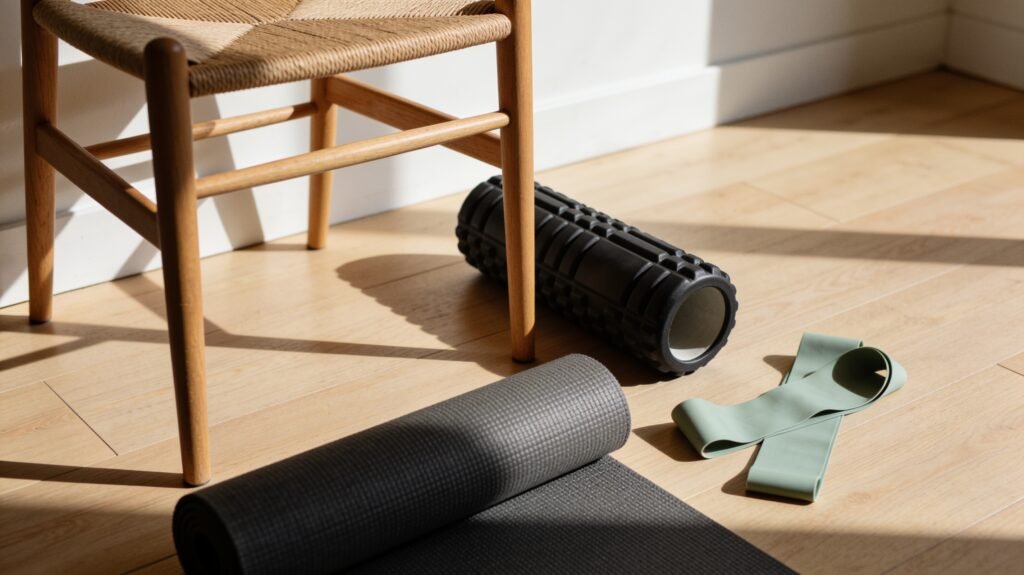
Resistance bands allow progressive strengthening without heavy axial loading on joints. Exercises like seated rows, lying hip abductions, and standing calf raises with a band build functional strength while keeping forces manageable. Bands come in multiple resistance levels, allowing gradual progression as strength improves.
7. Yoga (Modified for Joint Sensitivity)
Chair yoga and gentle hatha yoga specifically adapted for joint conditions improve flexibility, balance, and mental wellbeing. Look for classes labelled “gentle yoga”, “chair yoga”, or “yoga for arthritis”. Props like blocks, straps, and bolsters allow full participation regardless of current mobility limitations. Avoid hot yoga, which can increase inflammation.
8. Elliptical Trainer
The elliptical provides a full cardiovascular workout with zero impact — feet never leave the pedals. The gliding motion closely mimics walking and running mechanics without any of the compressive forces. Most gyms have ellipticals, and they are widely available for home use at various price points. Start with the lowest resistance and shortest stride length.
⚙ Your Low-Impact Starter Programme
Week 1–2: Pick ONE activity. Do 10–15 minutes, 3 days per week. Focus on comfort and consistency.
Week 3–4: Extend to 20 minutes. Add gentle chair strength exercises 2 days per week.
Week 5–8: Build to 25–30 minutes of your chosen cardio. Progress to 3 strength sessions weekly.
Month 3+: Combine two activities. Add a second form of exercise for variety.
🔔 Important: Stop if you experience sharp, new, or worsening pain. Mild discomfort (2–3 out of 10) during exercise is normal; sharp or severe pain (5+/10) is a signal to stop and consult a professional.
Managing Pain Before, During, and After Exercise
Understanding the difference between exercise-induced muscle soreness and damaging joint pain is critical. Muscle soreness typically begins 24–48 hours after exercise and feels like a dull ache in the muscle belly — this is normal and beneficial. Joint pain that occurs during exercise, presents as sharp or burning, or is accompanied by swelling or heat requires medical attention.
The 10-Minute Rule is a useful guideline: if you warm up with 10 minutes of very gentle movement and the pain does not improve or worsens, it is a rest day. If pain eases with the warm-up and remains manageable throughout, you can continue.
- Before exercise: 5–10 minutes of gentle movement (not static stretching cold); apply warmth if advised by your doctor
- During exercise: Stay at a 3–4 out of 10 on the pain scale; stop at 5 or above
- After exercise: Apply ice for 15–20 minutes if joints feel swollen or hot; elevate if possible
- Next-day assessment: If pain is worse 24 hours later, reduce intensity or duration next session
Exercises to Avoid When You Have Joint Pain
Not all exercises are created equal when joints are involved. The following should be avoided or modified until you have built a solid foundation of strength and pain tolerance:
- Deep squats and lunges — place intense pressure on the patellofemoral joint (kneecap). Modified chair-supported squats are the safer alternative.
- High-impact cardio — running, jumping jacks, burpees, and jump rope all create repeated loading. Replace with low-impact equivalents.
- Heavy overhead pressing — compresses cervical and shoulder joints. Light resistance band shoulder work is preferable.
- Sit-ups and crunches — flex the spine aggressively and can stress lumbar discs. Planks and bird-dogs are superior alternatives.
- Exercises with rapid direction changes — lateral movements and agility drills stress ligaments before they are ready.
Nutrition and Lifestyle Factors That Support Joint Health
Exercise alone is only part of the equation. Several dietary and lifestyle factors significantly influence joint health and pain levels:
Anti-inflammatory diet: Foods rich in omega-3 fatty acids (salmon, mackerel, walnuts, flaxseed), colourful vegetables, and whole grains help reduce systemic inflammation. Conversely, ultra-processed foods, refined sugars, and excessive alcohol amplify inflammatory processes.
Healthy body weight: Each kilogram of excess body weight adds approximately four kilograms of force on knee joints with every step. Even modest weight loss — 5–10% of body weight — produces significant reductions in knee pain in research studies.
Sleep quality: Growth hormone, which supports cartilage repair, is primarily released during deep sleep. Prioritising 7–9 hours of quality sleep supports joint recovery.
Stress management: Chronic psychological stress elevates cortisol and inflammatory cytokines, which worsen joint pain. Mind-body practices like meditation, deep breathing, and gentle yoga address both physical and psychological contributors.
▶ WATCH: Low-Impact Exercise for Joint Pain
Search YouTube for gentle, follow-along low-impact workouts designed specifically for joint conditions.
🔍 Find Guided WorkoutsWhen to See a Doctor or Physiotherapist
Self-directed exercise is appropriate for mild-to-moderate joint discomfort, but certain situations warrant professional assessment. Consult a healthcare provider if you experience: sudden severe joint pain, significant swelling or redness, pain that prevents sleep, pain following an injury, or pain that has not improved after 4–6 weeks of consistent low-impact exercise.
A physiotherapist can conduct a biomechanical assessment, identify movement patterns contributing to pain, and design a programme precisely tailored to your specific condition. Many people find that just two to three sessions dramatically accelerate their progress and confidence.
👉 Source: Versus Arthritis: The Benefits of Exercise for Arthritis
🚀 Your First Step: Choose one activity from this list that appeals to you. Commit to three sessions this week, each lasting just 10–15 minutes. The goal is not performance — it is simply to begin. Every session you complete is a vote for the healthy, mobile version of yourself you are working towards.