
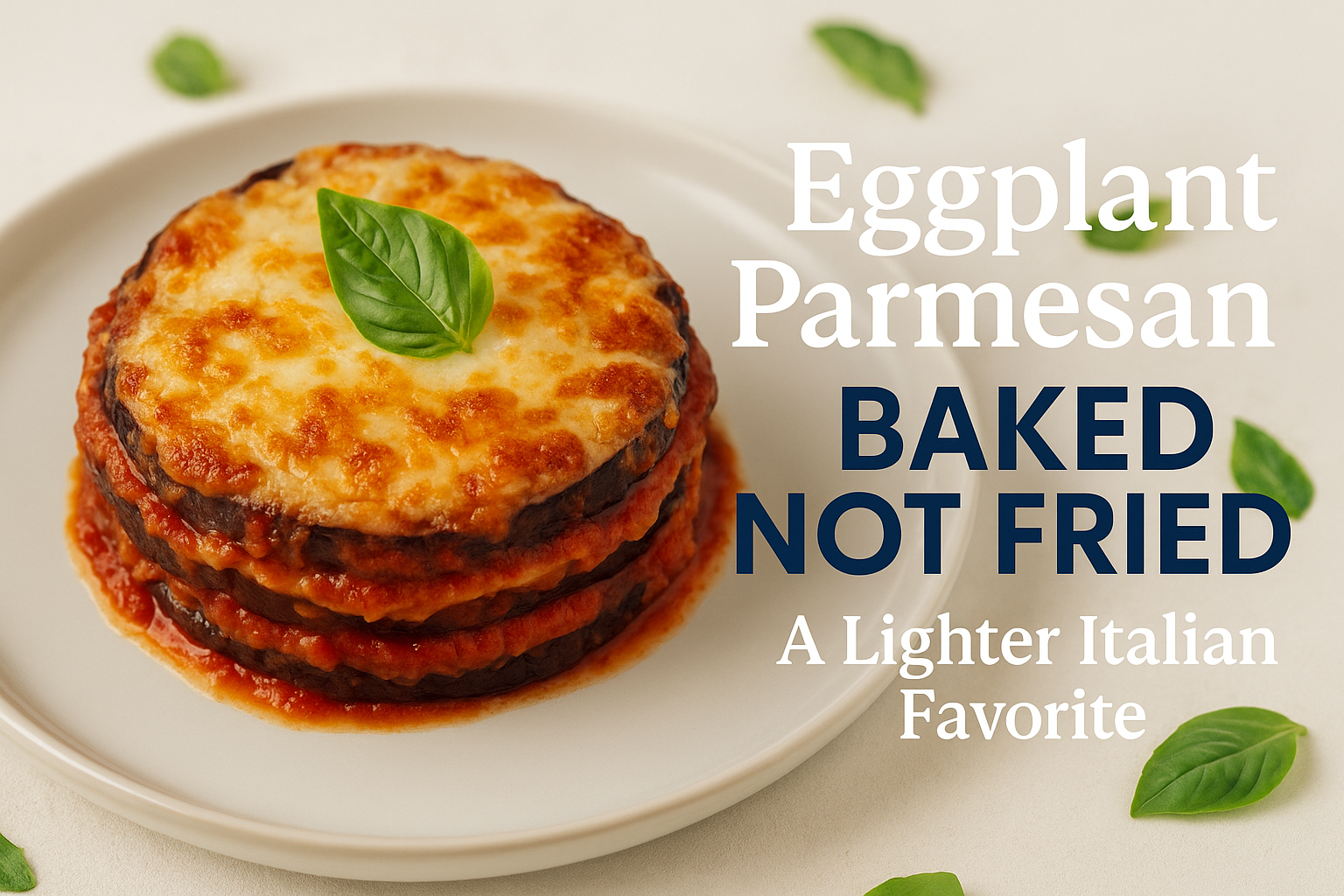
Eggplant Parmesan Baked Not Fried – A Lighter Italian Favorite
Imagine biting into layers of tender eggplant, rich marinara sauce, and melted cheese that pulls away in perfect strings—all without the heavy, greasy feeling that comes from traditional frying. That’s the magic of baked eggplant parmesan, a dish that delivers all the comfort and flavor of its classic counterpart while being significantly lighter on your waistline and your conscience. 🍆✨
This beloved Italian-American dish has graced dinner tables for generations, but the traditional preparation method—dredging in flour, dipping in egg, coating with breadcrumbs, and deep-frying—can turn a vegetable-based meal into a calorie bomb. The good news? Baking instead of frying transforms this indulgent favorite into a healthier option that doesn’t sacrifice taste or satisfaction.
Whether you’re looking to lighten up your weeknight dinners, impress guests with your culinary skills, or simply enjoy Italian comfort food without the guilt, this comprehensive guide will walk you through everything needed to master baked eggplant parmesan in 2025.
Key Takeaways
Why Choose Baked Over Fried Eggplant Parmesan?
The Health Benefits Are Substantial
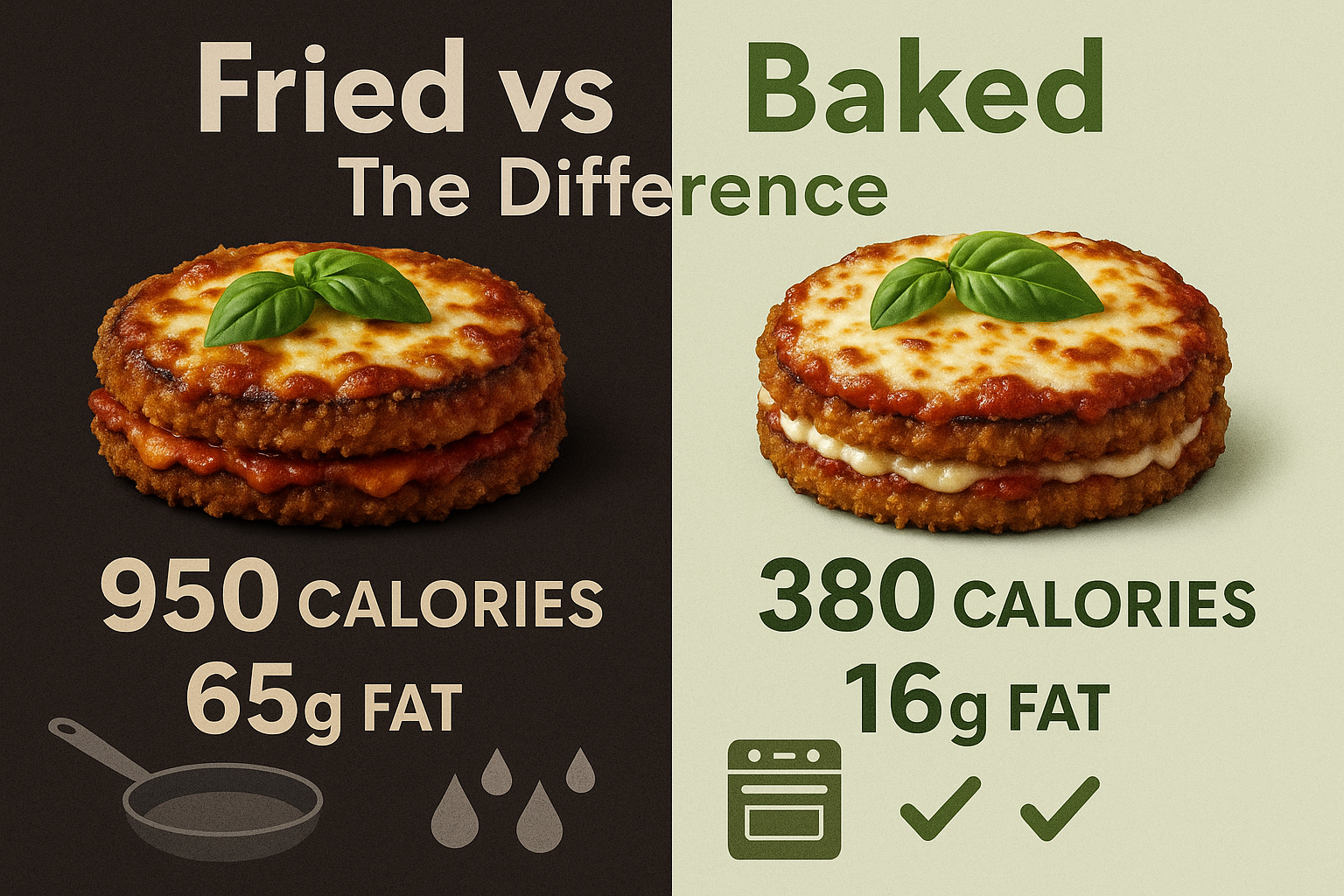
When comparing baked versus fried eggplant parmesan, the nutritional differences are striking. Traditional fried eggplant parmesan can contain 800-1,200 calories per serving, with much of that coming from the oil absorbed during frying. Eggplant acts like a sponge, soaking up enormous amounts of oil—sometimes up to half a cup per eggplant!
By contrast, baked eggplant parmesan typically contains 300-450 calories per serving, depending on the amount of cheese used. That’s a reduction of more than 50% in most cases, making it a much lighter option for those watching their calorie intake.
Nutritional comparison per serving:
| Preparation Method | Calories | Fat (g) | Saturated Fat (g) | Carbs (g) | Protein (g) |
|——————-|———-|———|——————-|———–|————-|
| Fried | 950 | 65 | 18 | 68 | 32 |
| Baked | 380 | 16 | 8 | 42 | 24 |
Beyond calories, baked eggplant parmesan offers additional health advantages:
The Practical Advantages
Health benefits aside, baking eggplant parmesan offers several practical advantages that make it the superior choice for home cooks:
Less mess and cleanup 🧹 – No splattering oil, no disposing of used frying oil, and fewer dishes to wash.
Safer cooking process – Eliminates the burn risk associated with hot oil and reduces fire hazards in the kitchen.
Batch cooking friendly – Bake multiple trays at once rather than frying in small batches, making meal prep more efficient.
More hands-off time – Once the dish is in the oven, there’s time to prepare sides, set the table, or even squeeze in a quick arm toning workout while dinner cooks.
Better texture consistency – Baking ensures even cooking throughout, whereas frying can result in some pieces being overcooked while others remain undercooked.
Selecting and Preparing the Perfect Eggplant
Choosing Your Eggplant
Not all eggplants are created equal when it comes to making eggplant parmesan. Here’s what to look for:
Globe eggplants (the large, dark purple variety) are the traditional choice and work beautifully for this dish. Look for:
Italian eggplants are slightly smaller and sweeter, with fewer seeds—an excellent choice if available.
Avoid:
The Critical Salting Step
This is where many home cooks go wrong. Salting eggplant isn’t optional—it’s essential for three important reasons:
How to salt eggplant properly:
“The salting step is non-negotiable. It’s the difference between restaurant-quality eggplant parmesan and a soggy, bitter disappointment.” – Chef Maria Rossini
To Peel or Not to Peel?
This is largely a matter of personal preference:
Keep the skin on if:
Peel the skin if:
For most preparations, leaving the skin on is recommended—it helps the slices hold together during baking and adds nutritional value.
The Perfect Breading Technique for Baked Eggplant
Setting Up Your Breading Station
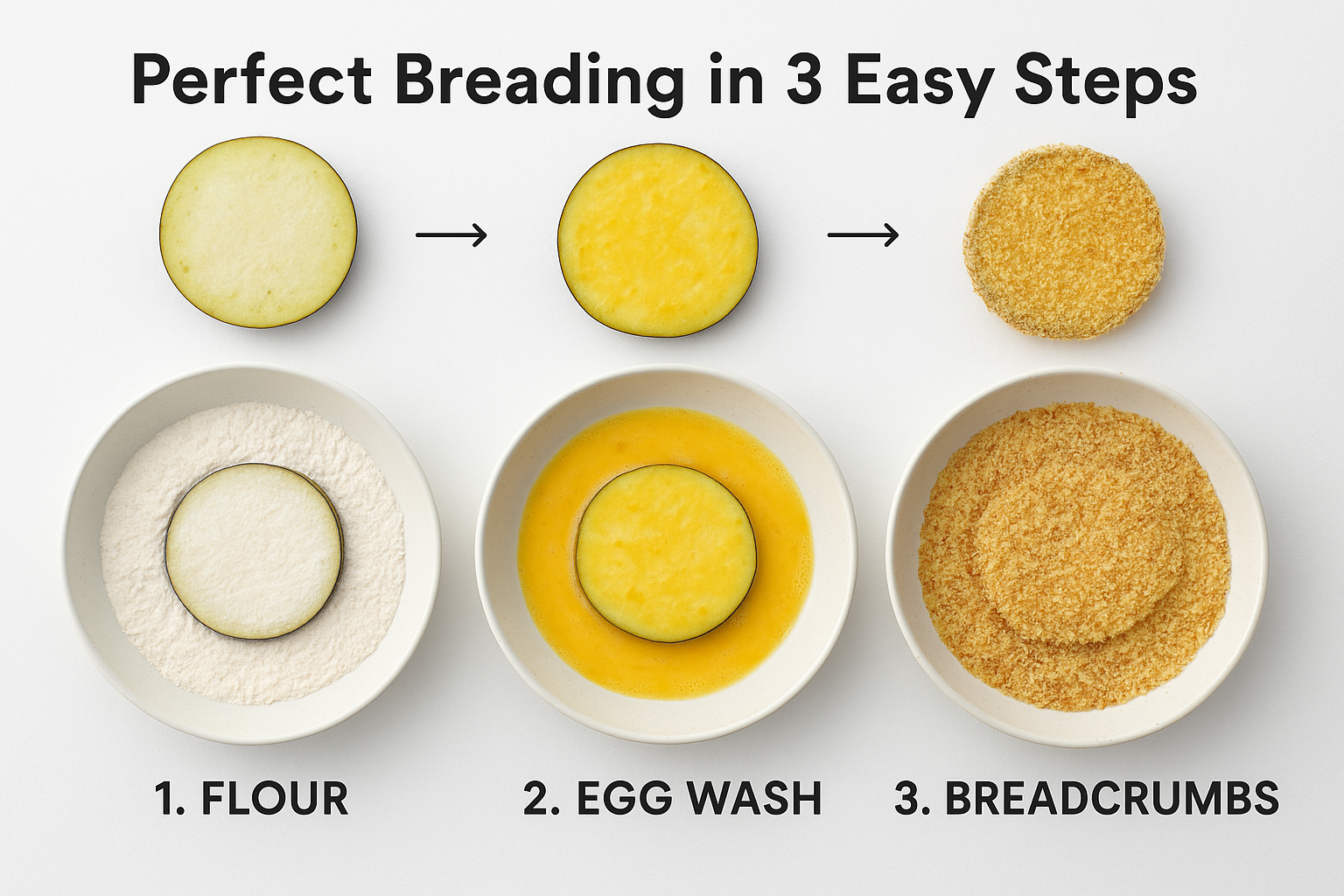
Organization is key to efficient breading. Set up three shallow dishes in assembly-line fashion:
Station 1: Flour
Station 2: Egg Wash
Station 3: Breadcrumb Mixture
Pro tip: Keep one hand designated as your “dry hand” (for flour and breadcrumbs) and one as your “wet hand” (for egg wash). This prevents your fingers from becoming hopelessly coated in breading! 👋
The Three-Step Breading Process
Place breaded slices on a wire rack set over a baking sheet (this allows air circulation and prevents soggy bottoms).
Achieving Crispiness Without Frying
The secret to crispy baked eggplant lies in these techniques:
Use a light oil spray or brush 🖌️ – Lightly mist or brush the breaded eggplant slices with olive oil before baking. This helps achieve golden-brown color and crispy texture.
High initial temperature – Start baking at 425°F to set the coating quickly.
Don’t overcrowd – Leave space between slices for air circulation.
Flip halfway through – Turn slices after 15-20 minutes for even browning on both sides.
Use a wire rack – Elevating slices allows heat to circulate underneath, preventing sogginess.
Consider panko breadcrumbs – Their larger, airier structure creates extra crunch.
Building the Ultimate Baked Eggplant Parmesan
Layer Like a Pro
The layering technique significantly impacts the final result. Here’s the optimal approach:
Bottom layer: Start with a thin layer of marinara sauce (about ½ cup) to prevent sticking.
First eggplant layer: Arrange baked eggplant slices in a single layer, slightly overlapping if necessary.
Sauce layer: Spread about 1 cup of marinara sauce evenly over the eggplant.
Cheese layer: Sprinkle with shredded mozzarella (about ¾ cup) and grated Parmesan (about ¼ cup).
Repeat: Add another layer of eggplant, sauce, and cheese.
Top layer: Finish with remaining eggplant, a generous amount of sauce, and a final layer of both cheeses.
Garnish: Add fresh basil leaves and an extra sprinkle of Parmesan before the final bake.
Sauce Selection Matters
While homemade marinara is ideal, quality store-bought sauce works perfectly well. Look for:
Quick homemade marinara recipe:
Cheese Choices and Combinations
Traditional eggplant parmesan uses two types of cheese:
Mozzarella (the star player) 🧀
Parmesan (the flavor enhancer)
Optional additions:
The Complete Baked Eggplant Parmesan Recipe
Ingredients
For the eggplant:
For assembly:
Step-by-Step Instructions
Step 1: Prepare the eggplant
Slice eggplants into ⅓-inch rounds. Salt generously on both sides and let sit for 45 minutes. Pat completely dry.
Step 2: Set up breading stations
Arrange three shallow dishes with flour (seasoned with salt and pepper), beaten egg mixture, and breadcrumbs mixed with ½ cup Parmesan and Italian seasoning.
Step 3: Bread the eggplant
Dredge each slice in flour, dip in egg, then press into breadcrumb mixture. Place on wire racks set over baking sheets.
Step 4: Bake the eggplant
Preheat oven to 425°F. Spray breaded eggplant lightly with olive oil. Bake for 15 minutes, flip, spray again, and bake another 15 minutes until golden and crispy.
Step 5: Assemble the dish
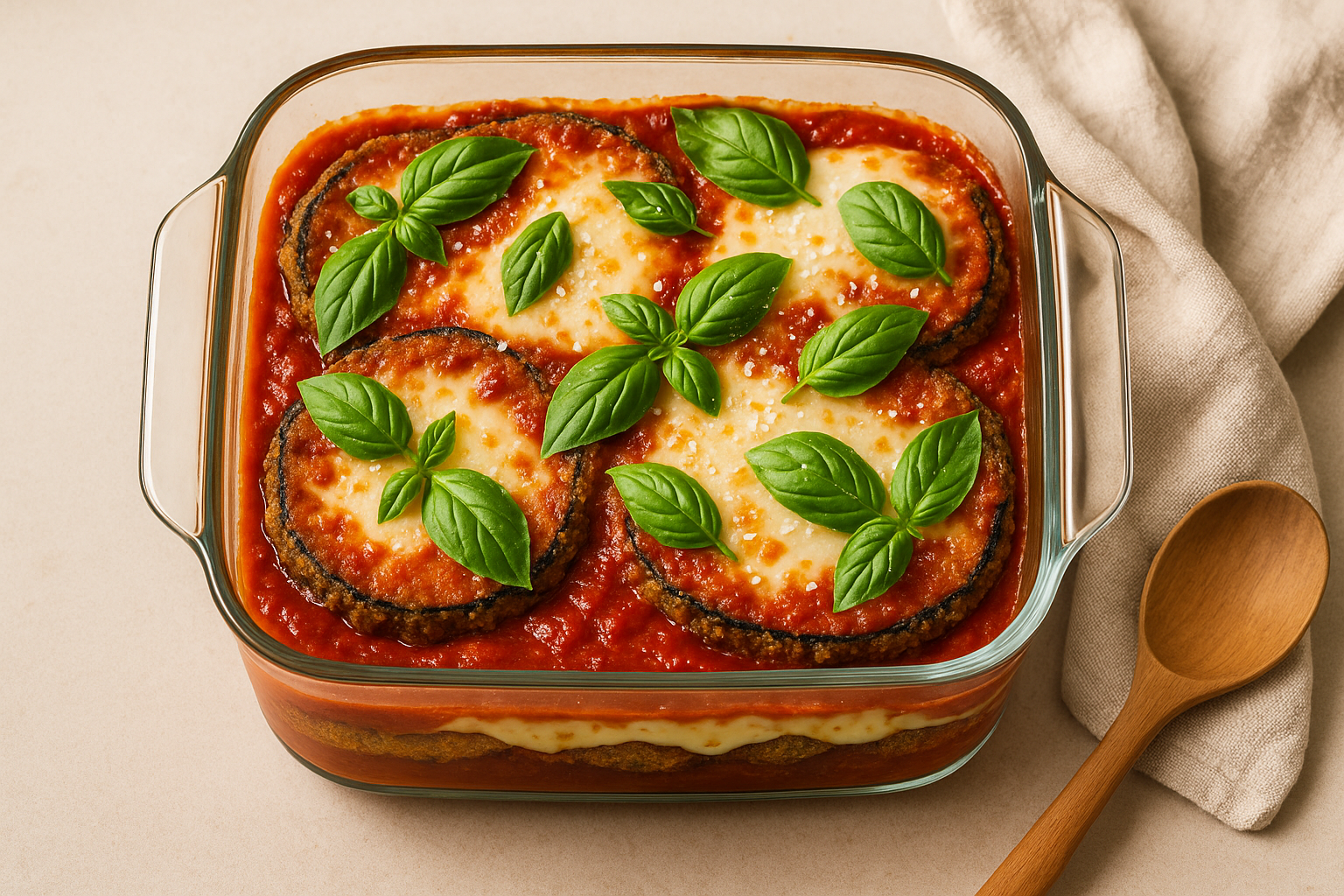
Reduce oven to 375°F. In a 9×13-inch baking dish, spread ½ cup sauce on the bottom. Layer half the eggplant, half the remaining sauce, 1½ cups mozzarella, and ¼ cup Parmesan. Repeat layers, finishing with remaining cheese.
Step 6: Final bake
Cover with foil and bake 25 minutes. Remove foil and bake another 15-20 minutes until cheese is bubbly and golden. Let rest 10-15 minutes before serving.
Step 7: Garnish and serve
Top with fresh basil leaves and serve with pasta, crusty bread, or a simple green salad.
Make-Ahead and Storage Tips
Preparing in Advance
Eggplant parmesan is an excellent make-ahead dish, perfect for meal prep or entertaining:
Option 1: Fully assemble, refrigerate, then bake
Option 2: Bake the eggplant slices ahead
Option 3: Freeze for later
Storage and Reheating
Refrigerator storage:
Leftover eggplant parmesan keeps well for 3-4 days in an airtight container. The flavors often improve as they meld together! 😋
Reheating methods:
Oven (best for maintaining texture):
Microwave (quickest option):
Air fryer (best for crispiness):
Customizations and Variations
Dietary Adaptations
Gluten-free version:
Vegan version: 🌱
Keto/low-carb version:
Dairy-free version:
Flavor Variations
Mediterranean twist:
Spicy version: 🌶️
Protein-boosted:
Garden vegetable:
Serving Suggestions and Pairings
What to Serve Alongside
Eggplant parmesan is substantial enough to serve as a main course, but these sides complement it beautifully:
Classic pairings:
Lighter options:
Wine pairings: 🍷
Portion Sizes and Serving
A standard 9×13-inch pan of eggplant parmesan serves:
Cut into squares and serve with a spatula, allowing the dish to rest 10-15 minutes before cutting for cleaner slices.
Common Mistakes and How to Avoid Them
The Top Pitfalls
Mistake #1: Skipping the salting step
Solution: Always salt and drain eggplant for at least 30 minutes. This single step prevents watery, bitter results.
Mistake #2: Slicing eggplant too thin or too thick
Solution: Aim for consistent ⅓-inch slices. Too thin and they’ll disintegrate; too thick and they won’t cook through properly.
Mistake #3: Using too much sauce
Solution: Less is more. Excess sauce makes the dish soupy. Use just enough to coat each layer—about 3-4 cups total for a 9×13 pan.
Mistake #4: Not letting it rest before serving
Solution: Allow 10-15 minutes resting time after baking. This lets the cheese set and makes serving much easier.
Mistake #5: Overcrowding the baking sheet
Solution: Give eggplant slices space when baking them initially. Overcrowding creates steam, preventing crispiness.
Mistake #6: Using pre-shredded cheese
Solution: Pre-shredded cheese contains anti-caking agents that prevent smooth melting. Shred your own for best results.
Mistake #7: Baking at too low a temperature
Solution: Start with high heat (425°F) for the eggplant slices to achieve crispiness. Lower to 375°F for final assembly.
Troubleshooting Guide
Problem: Soggy eggplant
Problem: Bitter taste
Problem: Dry, tough texture
Problem: Falling apart when served
The Health and Fitness Connection
Nutrition Benefits Beyond Calories
While the reduced calorie count is the most obvious benefit of baked eggplant parmesan, this dish offers numerous nutritional advantages:
Eggplant nutrients:
Protein from cheese:
Lycopene from tomato sauce:
Fitting Into Your Fitness Goals
Baked eggplant parmesan can support various health and fitness objectives:
For muscle building: 💪
The combination of protein from cheese and complex carbs from breadcrumbs provides post-workout nutrition. Enjoy after an arm toning workout or dumbbell shoulder exercises session to support recovery.
For weight management:
At 300-450 calories per serving (versus 800+ for fried), this lighter version allows you to enjoy comfort food while maintaining a calorie deficit.
For heart health:
Baking instead of frying dramatically reduces saturated fat and eliminates trans fats from deep-frying. The Mediterranean-style ingredients support cardiovascular wellness.
For sustained energy:
The balance of protein, complex carbohydrates, and healthy fats provides steady energy without the crash that comes from heavy, fried foods.
Beyond the Basics: Advanced Tips
Restaurant-Quality Techniques
Use a mandoline for perfect slices
Invest in a mandoline slicer for uniform thickness. Consistent slices ensure even cooking and professional presentation.
Double-bread for extra crunch
For special occasions, try double-breading: after the standard flour-egg-breadcrumb process, dip back in egg and breadcrumbs once more.
Add fresh herbs to breadcrumbs
Mix finely chopped fresh basil, oregano, or parsley into breadcrumbs for elevated flavor.
Brush with garlic oil
Instead of plain olive oil spray, brush slices with garlic-infused olive oil before baking.
Finish under the broiler
For extra-golden, bubbly cheese, finish the dish under the broiler for 2-3 minutes (watch carefully to prevent burning).
Scaling for a Crowd
When cooking for large gatherings:
Make multiple pans
Rather than one oversized dish, prepare 2-3 standard 9×13 pans. They bake more evenly and are easier to handle.
Set up an assembly line
Recruit helpers for breading and assembly. One person can slice, one can bread, one can bake, and one can assemble.
Invest in quality bakeware
Heavy-duty metal or ceramic baking dishes distribute heat better than thin disposable pans.
Keep warm in the oven
Hold finished dishes at 200°F for up to an hour before serving.
Conclusion: Embrace the Lighter Side of Italian Comfort Food
Baked eggplant parmesan proves that healthier eating doesn’t mean sacrificing flavor, satisfaction, or tradition. By choosing to bake instead of fry, this beloved Italian-American classic transforms into a lighter meal that fits seamlessly into a balanced lifestyle—whether goals include weight management, heart health, or simply feeling better after dinner.
The beauty of this dish lies not just in its reduced calorie count, but in its versatility, make-ahead convenience, and ability to please crowds. From busy weeknight dinners to special occasion entertaining, baked eggplant parmesan delivers restaurant-quality results without the restaurant price tag or the guilt of deep-fried indulgence.
Your Next Steps
Ready to master baked eggplant parmesan? Here’s your action plan:
Whether serving this as a post-workout meal after dumbbell shoulder exercises, as a family dinner that even picky eaters will love, or as an impressive dish for entertaining, baked eggplant parmesan deserves a permanent place in your recipe rotation.
The next time the craving for Italian comfort food strikes, skip the takeout and the deep fryer. Instead, embrace this lighter, healthier version that honors tradition while supporting wellness goals. Your taste buds—and your body—will thank you! 🍆🧀✨
—
SEO Meta Information
Meta Title: Baked Eggplant Parmesan Recipe – Healthy Not Fried 2025
Meta Description: Learn to make crispy baked eggplant parmesan with 75% fewer calories than fried. Step-by-step guide with tips, variations & make-ahead instructions.
—